12-Month Countdown to Tax-Raid On Pensions
Transcript
speaker-0 (00:00.078)
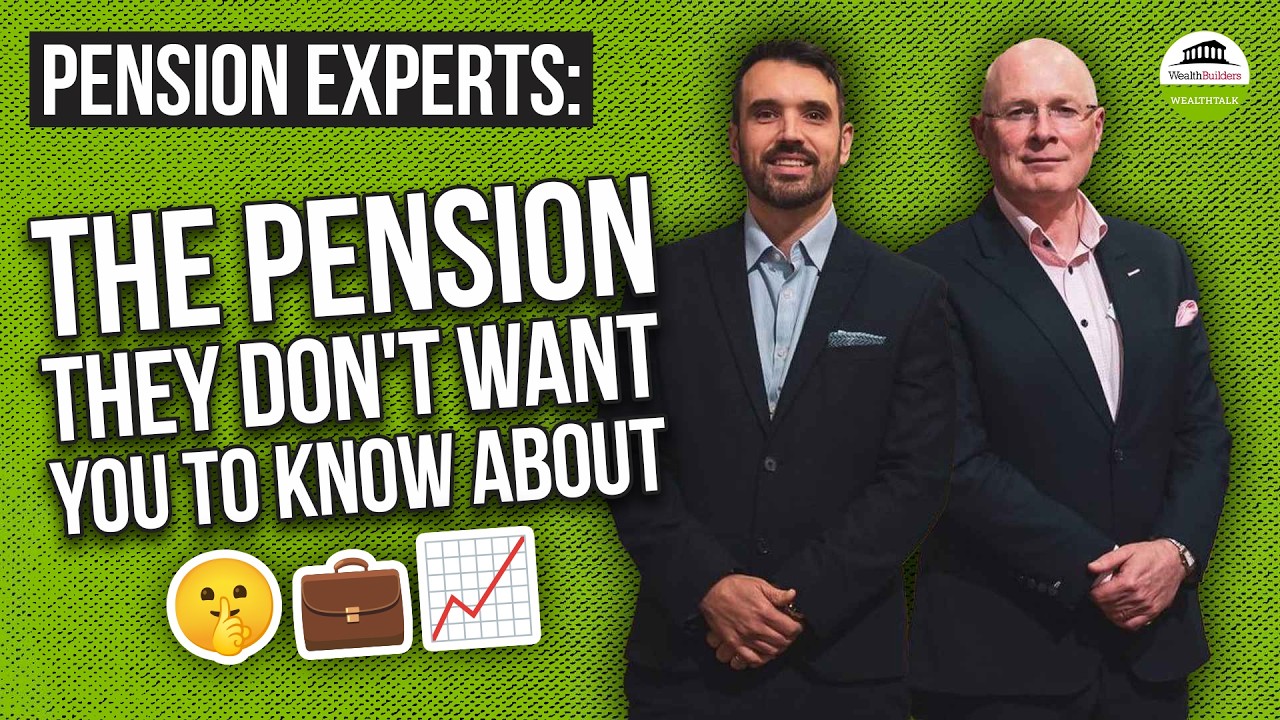
I'm not happy. The Royal Assent has been signed. The stamp of approval has been made. No longer a proposition, but a firm enshrinement into law, which is the pensions law under the Finance Act. The government now able from April 2027 to tax pensions on death. Now most people can't do anything about it, but what can someone do that's different to be able to respond?
and make a decision about taking more control.
speaker-1 (00:31.264)
lives into one vehicle for ease of management.
speaker-0 (00:33.624)
Hello and welcome to this episode of Wealth Talk, place where you can learn how to build and protect and then ultimately, of course, transfer your wealth. And I'm joined today by somebody known to many of us. He's the SAS director at Wealth Builders and a colleague of mine. It's Paul Brook. So welcome, Paul.
speaker-1 (00:54.414)
Hey Kevin, how are you?
speaker-0 (00:56.53)
I'm tickety-boo, thanks very much. And I know we both like to have a bit of a refresh and a recharge and get our batteries replenished, don't we? And I think we both had a little bit of a break. You in sunnier climbs, me in colder climbs.
speaker-1 (01:13.866)
That was great, thank you. lots of time with the family, which is great. I know you appreciate that too. It's always good to get away and spend time with your loved ones. So every time I get the opportunity to do that, it's well received for me. And yeah, a little bit blustery, I have to say, for the first week, but good. Really nice.
speaker-0 (01:35.182)
Over in the Canaries, they're known for that aren't they?
speaker-1 (01:37.518)
They are but a bit more blustery than usual this time around so but it was fine you know there's always things to do there and and then it was good to just get the opportunity to to relax and unwind a little bit.
speaker-0 (01:49.646)
Welcome to a bit of my bluster because I'm not happy. I'm not happy because the Royal Assent has been signed, the stamp of approval has been made, no longer a proposition but a firm enshrinement into law, which is the Pensions Law under the Finance Act, which says the government now got a license to print money. And no, I don't mean it's the Bank of England.
speaker-1 (01:52.896)
yeah, okay.
speaker-0 (02:19.702)
or the Royal Mint, although we can talk about minted, the government now able from April, 2027 to tax pensions on death. And I've never seen that before. So I'm going to bluster about that as I have done for many years, but I've just come back from a blustery country as well. Actually, I was cruising the fjords and enjoying the serenity and the minus temperatures and came back looking a bit like a Viking.
for those who can see me sporting, you know, something I don't normally wear, but anyway, I don't have the locks. So, you know, just, just fixing that one in your thoughts if you're listening, but it's a big deal, right? So joke in a par the government now taxing pensions from April, 2027. And when I was cruising, I was thinking, cause I always do. And you know that when I come back, go wrong. What, what, what ideas has Kev got again?
speaker-1 (03:18.134)
Yeah, we all brace ourselves, Kevin. Yeah.
speaker-0 (03:20.866)
Do you get braced for this one? The seven seas, right? Which is about retirement planning, given the new rules and you can do the seven seas of SAS, I guess. But, and it came to me because when you're cruising, there was two seas, the North sea, which everybody knows. And that's quite poignant for me because when my dad died, if you remember, on a North sea oil rig, and so, you know, that was poignant, but then I got blustered about a bit in the Norwegian sea.
was a bit choppy. So, you know, in your nice cabin, then go on the veranda with a sick bag in hand just in case, you know, but it was fine. But the sea legs definitely weren't there for a few hours. And when I was thinking about, wow, these two seas are remarkably different, I thought about the seven seas, not sailing the seven seas, but each letter meaning something.
that is relevant for our discussion today. So how about we give it a go? The first C, I'm going to talk generally and if you can maybe bring your experience of SaaS and why SaaS can help in a way that perhaps traditional pensions can't is control. Because whenever things change, you've got to be financially aware of the change so that you can choose and carefully react.
and make a decision. And that comes from clarity. That's not another C, but you get the point that once you've got the clarity to understand, you can then make a decision about how you react and want to control that. Now, most people can't do anything about it because the law is just going to tax their money. But what can someone do with that's different in SaaS to be able to respond and make a
a decision about taking more control than a conventional pension, which would just be aware that if you die, the government have got the right to assess your money for tax. What are the control issues in SAS then?
speaker-1 (05:28.684)
Yeah, the first, which is the thing that attracts most people to SaaS is the ability to have control over how and where you invest your money before you get to a point where you're thinking about legacy. And let's not forget that a SaaS is just a type of pension, albeit a very sophisticated type of pension for entrepreneurs. So it's designed to help you build wealth in a very tax-efficient way. And a SaaS uniquely puts you in the driving seat of
of your own pension in a way that others just can't. And it's very, very similar to being a director of your own limited company. You're at the top, you're making strategic decisions about how and where you want your business to go. Well, it's exactly the same with the SaaS. You make the decisions about how and where you want to invest your money and the kind of things that you want to do, along with any other trustees, family members or business partners or both potentially.
But it ultimately means you're calling the shots. And you could dictate almost every element of how the SAS runs, how it's going to be set up for future retirement, what's going to happen when you're no longer here.
speaker-0 (06:39.374)
That's a really interesting point and one that I never thought of before. Obviously, different people listen to the podcast at different times and some are regular listeners and some might be new. SaaS being the small self-administered scheme is sort of a pension for business owners. It's not for employees. However, there are entrepreneurs in the making and you can create a limited company within the space of a few months anyway, can't you?
One of the distinctions you just made that frankly I've not thought about before. I just want to check if you believe this to be true. That we know that most employees can't become wealthy because there's no leverage. There's no control. The structure is all created for them. And then they've got a risk of redundancy or AI or something interrupting the need for that work or the health indeed. Being in business puts you more in control of the
the processes, the structures, the outcomes, the ability to generate recurring income. Are you saying a conventional pension is like being an employee where the structure is already created for you and you're not in control and a SaaS is like being in business because you create your own structures and you are in control. Is that a fair parallel?
speaker-1 (07:59.368)
I think it's absolutely a fair parallel. The ability to be flexible within a standard pension is almost non-existent because as you just outlined there, all of the framework is created. The rules that govern what you can and can't do are in place. You don't get the ability to shape those. So yeah, I think it's a great example of the entrepreneurial nature of a SaaS is a bit like the entrepreneurial nature of being a business owner and running a business rather than the traditional
employed route for sure.
speaker-0 (08:30.414)
And I suppose that sort of leads to a thought which is, you speak to most employees, they crave that dependency. And even though it might be an illusion for many, not all, because you can earn well and then save the proceeds and build wealth that way. But most people struggle with that. Whereas with the SaaS, because you've got that
entrepreneurial desire already, you're already willing to get involved. You're already willing to make decisions. And to a certain degree, even if you don't want to invest in the stock market, which you can in the SaaS, we'll come onto that in a minute, but there are just more entrepreneurial things you can do, particularly around your own business and supporting that or property, because you can buy property, commercial property, even residential property within certain more technical natures of SaaS.
So, yeah, I see you a point that it doesn't suit everyone. It's not for everyone. Reason you're on is not to say, Hey guys, it's assets for everyone. It's to say, if you're an entrepreneurial person, if you're minded to want control, this might be something to take a look at because it might just help you with your inheritance tax as well. we'll, we'll definitely want to come onto that. Next C Paul is consolidation. Right. The reason why I thought.
You what? People should be thinking about consolidating more than ever before, because with inheritance tax coming, the responsibility for paying the inheritance tax on people's pensions when it's due falls on executives. And the executives need to know where the bloody pensions are. And given there's whatever it is now, 30 billion or more of pensions floating around in the sort of financial ether, as it were.
unclaimed, yet there'd be inheritance tax due potentially on some of those pensions. just putting your pension house in order, working out where things are, what to do to get them visible and then recorded for the next generation would be a good thing. And simplifying, instead of having a sort of a patchwork quilt of pensions accumulated in various places, having them in one place.
speaker-0 (10:56.332)
might just be a thing to be to consider. Yes, there are things you need to think about like costs and benefits, but just generally, think consolidation is a good thing to be thinking about. How does SAS help with people consolidating? How does that actually work?
speaker-1 (11:15.246)
A SaaS can collect money from almost any type of existing pension. There are a few exceptions and it's probably not worth getting into the detail of that now. But you know, if you've got a pension that is in some way connected to the stock market, goes up and down in value.
And people accumulate pensions across their working life, don't they? Typically, you know, I think the average number of pensions that we see when we're working with people is sort of three to four, because over their working life of 15, 20, 25 years, they've accumulated different spells of employment and different pensions. The SAS has got the ability to sort of collect all those up and bring them all into one place. So it's easy to, I suppose, think about that wealth all in one.
vehicle. And I'm sure we'll come onto this soon, but it's not just one person's consolidated pensions, but potentially multiple people's consolidated pensions, which is where the compounding impact of that really kicks in as well. You're bringing together that capital all in one place, which means it's easier to manage, it's easier to invest again, and back to control again. You've got better control of your money. And when you've got better control of your money,
you're gonna get a better return.
speaker-0 (12:30.56)
Interestingly, although it's not another C that I thought of, you can get more capital than you've actually got in the South Card, because if you have two, three, four people join their pensions together, and let's say it's half a million just for a number, then they can go to a bank and get another 250, can't they? So there's 50 % addition can be borrowed, which means more spending power, more buying power, more control over the value of the asset, which
If you've got a conventional pension and with an insurer and you say, well, go and see a bank and say, will you lend me money secured on this? You got no chance. So there's, there's an interesting one. I didn't think about the capital piece, but it's a good one, Paul. Let's talk about costs or charges. You know, I'm blustering, as you know, about inheritance tax, but I bluster equally on the subject of fees because I think fees are like taxes.
If you don't know what's happening, you just pay them willingly, lying down and letting the fees just get taken from you, removing compounding, removing capital, removing money from your pension without really having a sense of whether you can control those fees. Yet you can. And even conventional pensions, you can look at the fees and charges and get transparency on that.
and consolidate into one plan, which would be just lower cost to run. And that can save, at least on the building stage of a pension, controlling costs can mean more money in the pension in the end. How does the cost thing work as far as, let's talk about the running costs. We know there's a small amount of establishment cost of a SaaS, but from a running cost point of view,
How does that give a SaaS owner or owners more control over their charges?
speaker-1 (14:33.73)
great thing about a SaaS is the cost structure is not based on value. Whereas most conventional pensions have a fee that is linked to a percentage of the underlying pot. Funds under management is a phrase that's used a lot in the financial world, but it basically means how much of your money have we got on our platform? It could be Isis, it could be pensions, it could be...
collective accounts doesn't matter. When you've got a traditional and especially more more I guess in the pension world and the sort of ISA world you've got percentage of value is the charging basis. Ironically the better your money does the more you pay. Well what's fantastic about SAS is it steps away from that model entirely and says like a business
the cost of running the SaaS is not based on the revenue. It's not based on the profit. It's based on what work is being done. So you could have a large SaaS, know, half a million pounds, for example, instead of paying 1 % or, you know, 5,000 pounds or 2%, you know, when you think about, you know, the, fun costs and the platform costs and other costs that come in, you know, you could be paying
a sizable amount of cost each year, you could be running that same SaaS in a more entrepreneurial way and it could be costing you £2,000 a year or £2,500 a year or possibly even less depending on what you're doing. And the great thing about it is you're charged for work that's done without any connection to the value of the investment or the value of the SaaS overall. So you step entirely away
from a scenario where the more your money works, the more you pay.
speaker-0 (16:30.232)
So in this case, the more your money works, the more you keep.
speaker-1 (16:33.442)
Absolutely.
speaker-0 (16:35.502)
Okay, that's going to add to the value and we want people to have great values, notwithstanding there needs to be a strategy to pay inheritor's tax, but you don't want to avoid inheritor's tax by having no money. I mean, that's counterintuitive, isn't it? All right, that was interesting. And I suppose it makes it easier to control and the visibility of costs are there because if it's one fee once a year, you can see what it is and you don't have this opaque thing of how much am I paying again? I don't really know because it's hidden.
somewhere in this wall print on page 23.
speaker-1 (17:07.406)
There is one other big advantage of a SaaS from a cost perspective too, and probably not really recognized for most people. Because a SaaS is a type of company pension, you have to be a business owner to have a SaaS. All of the costs of running the SaaS are legitimate tax deductible expenses for your business, which means if you're VAT registered, you eliminate or neutralize the VAT. if you've obviously then got the cost.
as a corporation tax deductible expense. So you're netting down and the actual end result is you pay far less because you're getting tax relief. Well, in a SIP or a traditional personal pension or any other kind of pension, the fees can't be paid by the business. They're not a legitimate business expense. So you're paying the gross fee, whereas with the sash, you're paying a netted down fee because you're saving on the tax.
speaker-0 (17:59.266)
Very good point. think most people think if the business pays the contribution, the running costs of the pension usually will be a SIP when we see more SIPs than anything else, that the SIP running costs will be offsetable, but they're not. Interesting. I mean, that's quite a valuable benefit if you're talking about multiple members, multiple contributions over multiple years, that's massive.
speaker-1 (18:25.71)
Maybe we should have another C for compound.
speaker-0 (18:28.206)
Well, well, you know, all these things will be, I suppose, blended together. you know, the point of the C's was just for a bit of fun to give us a framework to have a conversation. I'm sure more will come out in our dialogue. What about you hinted at it earlier on the fact that people can join together their pensions, husbands, wives, family, up generation, down generation, even side generation, you provided it's appropriate and you've got the right plan.
multiple people can join because there's a maximum of 11 in a SaaS. So that's quite a big family really. But how does the collaboration work? Cause most conventional pensions, it's a pension for one, you're in a box for one. And therefore you're paying charges in one box. Suppose if you've got four people joining a SaaS, they're removing four sets of different charges as well for one common charge, which is then visible to all.
bit like sort of amalgamating the pensions can bring an overall benefit for doing that. But how's the collaboration work in SAS, both inside the SAS and outside the SAS,
speaker-1 (19:37.644)
Yeah, so when I'm kind of talking about collaboration, I'll talk about internal and external, which you just said there. So internal collaboration would be the ability to invite other people to bring their funds into the SAS. And alongside yours, you've got a investment war chest, if you like. And very commonly, we see spouses or civil partners or life partners bring their pots together.
But we also see couples with children, adult children. So to your point about down generation, you can actually start to build a family SaaS, which is a genuine legacy asset because the parents found the SaaS and then they bring their adult children in and start to build pension for their children. And that gives you a bigger pot, which you can then invest together as a family.
So you're effectively consolidating, and we touched on that earlier, didn't we? Bringing together both existing pensions that are in various people's lives into one vehicle for ease of management, but also to give you more capital to invest with. You're then sharing the returns amongst all of the family. So everyone's benefiting from the entrepreneurial activity at the SAS.
speaker-0 (20:58.462)
What about collaboration outside? in terms of what I touched on earlier with you can collaborate with a bank and borrow money, which you can't do in a personal pension or workplace pension, for example. But how can you collaborate with others even if they're not in the same scheme as you? So how does that work?
speaker-1 (21:17.646)
SaaS can literally collaboratively purchase an asset, for example, with another business, with another person or with another SaaS. So here's a good example. Imagine, you you had a business partner, you had your own family, but you also had a business partner and they had their own family. You might not necessarily want to bring two family groups together in one SaaS. You could do, but you probably wouldn't want to. But if you each had your own SaaS,
as a family unit, you could, for example, buy the commercial premises for your business to operate from 50-50, let's say, between SAS number one, family number one, and SAS number two, which is family number two. So you pull together your resources, but without having to bring them together into the same vehicle. And when you've got a SAS, it's really important that the trustees, your fellow trustees, your spouse, your partner, whoever it might be,
are on the same page as you in terms of the investments that they want to make and the broad direction of travel. If you've got two individual SAS collaborating, you can pick and choose the projects that you want to collaborate on, but you're not obligated to do everything together. So you can keep your family SAS traveling in the direction you want it to travel, and you can bring it together with another SAS or another business or something like that when you choose.
speaker-0 (22:41.486)
So not just collaborating with SAS, but collaborate with your own company. So if you want to buy business premises, for example, that's really simple, isn't it? You could buy business premises and share it between you as the company and your SAS as an extension of your, I suppose, your family structures.
speaker-1 (23:03.214)
Absolutely. And we've had members do that. We've had members who've collaboratively purchased things with SAS. And it works well because it gives you, I suppose, some diversification, which is another important factor. Lots of people are right to think about spreading their money and avoiding the all eggs in one basket scenario. And although you could get into that in a number of ways, being able to potentially collaboratively buy
share of a building and a share of a rental income and then do the same again with another part of your pot gives you more diversification which I think is always an important thing to have.
speaker-0 (23:41.742)
I suppose, new information for people, whether you've got a SaaS, whether you're interested in SaaS, doesn't matter. just pulls giving that extra dynamic. We've talked about control, talked about consolidation and the simplification, the need to control costs because costs are just like taxes and we definitely need to start talking about inheritance taxes, attacks and minute. And then the creative.
point about being able to collaborate with yourself, with your company, with other companies, with other families, with other people, all of which brings, I suppose that creativity, which would be another C if we were being cheeky now, wouldn't it? I often do write this now, the 10 Cs. But anyway, the big one, I want to talk about inheritance tax and the fact that unused pensions, and I'll just mention what unused pensions are.
Because not all pensions are affected by inheritance tax. There are some pensions which by their nature are not value driven, but they're benefit driven. Where because it's a benefit doesn't count it as capital because inheritance tax attacks on capital, not a tax on income. So if you've got a final salary pension because you work for the public sector or you're working for a big company,
Although they pretty much all outdated now, they're pretty much all closed to new members, but some of our listeners will be members of final salary schemes. The income benefit you derive from those are not subject to an inheritance tax, so you avoid that. And if you bought an annuity, you know, where you've converted capital into an income stream, then the income stream isn't subject to an inheritance tax. But most people don't have those kinds of pensions anymore. They've got.
Money in a pot, you can tell that because they get a statement or they got an online platform and they can see it going up, going down, going sideways. Either way, that's natural. It's normal for that to happen. But if they have that volatility, the natural consequence of having a pension, you're building up a value is because you don't know when you're going to go and you don't know exactly how much you're going to need.
speaker-0 (26:07.424)
You need to build in a bit of margin for error. So you need a bigger pot than you're going to spend within the first few years. Otherwise you're going to run out money fast. So most people try and build the biggest pot possible. And I've fallen into that one. Tried to build the biggest pot possible thinking that I can spend what I want, but whatever's left goes to my kids or my, certainly my wife anyway, inherits is tax free to spouses.
but not in Harris's tax free going to children. And that's a big deal if you built up a big pension or you're aspiring to build one. So within SAS though, there are some unique benefits. And I want you to talk about one Paul, which I don't think anybody other than those who've listened to us will have heard before. And it's the C which I'm going to call cascading, but you might want to mention
the technical term that's used within SAS that allows the money or value to flow from one generation to the next in a legal, well-organized, well-structured and well-documented way over time, not in one go. We're not going to get too technical, but what on earth is cascading? Why is it different in SAS? And why is that a benefit?
speaker-1 (27:32.686)
Because a SAS is a multi-person scheme, it brings with it a uniqueness that doesn't apply to any other pension, which is always for a single person. And that's with multiple members, you can have multiple generations we talked about, up generation, down generation, side generation. Let's use that same example from earlier, you know, a couple and their adult children have a SAS.
All generations are in the same vehicle. You can use a really quite clever mechanism, which in the SAS world is called earmarking. You've called it cascading, but earmarking is how it's known in the SAS world. Effectively, what that means is you can choose within the SAS which assets you want to be earmarked to which people. And that allows you to control where the flow of income or growth or returns
goes on a member by member basis. If you've got to a point in your life and let's use you as an example here, Kevin, maybe you and your wife are in the SaaS and you've got to a point where you don't feel you need to grow the pot in your own name because you've got enough value there to give you the income you need or in other assets outside of the SaaS, then you could choose to
speaker-0 (28:48.778)
Or in other assets, of course.
speaker-1 (28:57.484)
assign the assets with the lowest value to you and your wife and try and assign as much of the assets with the highest returns or the highest growth to your children. And if you do that every year, alongside a continued effort to contribute money and grow the value of your children's pots, and they can therefore absorb more of the higher returning assets. so over time, your
your asset base becomes more and more of the more low return assets and your children's becomes more of the high returning assets. What you're effectively doing is deliberately stagnating the growth on your part whilst artificially accelerating the growth on their part. And so over time, and let's fast forward to a point where, you know, both you and your wife are no longer here and therefore that's when the inheritance tax calculation is done and the payment is due.
you've actually left a smaller sum subject to inheritance tax than you would have otherwise left because you've accelerated your children's pops and you've chosen to stagnate the growth on yours.
speaker-0 (30:08.29)
Yeah, and let's be clear about something. We're not stagnating the returns. We're still getting the same gross returns. So we still focused on getting the highest possible return for our investments, but just being more flexible and more creative about how that's allocated and that gradual process over time. And that's unique, isn't it?
speaker-1 (30:32.398)
Absolutely. within, you know, the only other multi-person vehicles, pension vehicles, are large corporate schemes where, again, individual members are just clustered together. In the sense of, you know, true collaboration, the SAS is the only vehicle that allows this, you know, collaboration of people to come together and family members to come together and choose strategically for the long term how and where they want the growth to
know, to crystallize with any individual person in the scheme, you know, and if you've got children, adult children that can join and inheritance tax is a big problem for you and potentially only going to get bigger as time goes on and the value of your assets grows. Earmarking or cascading can be a really powerful way to mitigate the inheritance tax it would pay on your pensions.
speaker-1 (32:29.344)
No, for sure there is. It's a great parallel actually because you are choosing to spill the lion's share of the returns over to the next generation before it becomes an inheritance tax problem. And in a nutshell, that's effectively part of the principle of what a family investment company is doing, isn't it? It's either trying to freeze and lock in the value and then the rest of the new growth overspills to other shareholders who might be your children.
It's exactly the same principle.
speaker-0 (33:01.1)
So I'm hearing that as we discussing these things, there's an awful lot of purposeful intention going here on here, not accidental results. And for some people, Paul, they get scared by that almost, ooh, these guys know what they're talking about. They've been doing it for years. How am I going to learn any of this? How am I going to implement?
Any of this at all sounds too complicated in any way if it's that good it can't be true it can't be real and the government gonna close it down cuz it's just a loophole. You know continuity if we added another see how long is this been going and why on the government gonna close down any of this.
speaker-1 (33:47.628)
Well, they've been around since the 70s, not too long ago had their 50th anniversary and people often think Sass is the new kid on the block and that Sips have been around for a long time. And actually the reality is, Sips are the new kid on the block and Sass has been around for many, many decades now.
speaker-0 (34:05.536)
I remember I had hair then.
speaker-1 (34:08.621)
Yeah, okay. Back in the glory days. So, you know, this is not a flash in the pan. These vehicles have been established, operating and enshrined in pension law for tens of years. It's unlikely they're going anywhere. And there's a lot of case law and precedent to back up the structure and the tax efficiency and some of the uniquenesses like the SAS, the ability to cascade and so on. So, you know,
The problem there not so well known is because they step away from the vanilla funds under management stock market only style that tends to be the default for most professions in the financial space. most people understand pensions are by large stock market focused through employment or otherwise. It's really the job of all of us in the financial space.
to be thinking about educating anyone who's entrepreneurially minded and who's got a business that a SaaS exists and it could be, not a shoo-in, absolutely not, but it could be a genuinely viable option for their family wealth and to help them accelerate their business too. And we haven't really spoken too much about how it can do that because the focus so far has been on thinking about consolidation and cutting costs and collaborating and so on.
speaker-0 (35:35.928)
Come onto that in a minute, but we'll do it next. But the thought I had as you were describing that is, we talk about the legal obligation to have a workplace pension, if you're an employee, and why these workplace pensions are on the stock market, it's not because it's the best way to build a retirement. It's just the least risky for the employer because they can't be held accountable for something that is just default. That's why they create default funds.
where everything is done so that you are taking the risk so they can't be sued. That's not a basis on how you build your wealth, that you take advice from somebody who's just avoiding being sued. The best person to deal with your wealth is you. that's why I encourage people, even if they're not SAS eligible, they think about how they could take more control than less control. But let's talk about the companies then, because if you're an employee, it's not relevant for you.
But if you're a business owner and we recently just supported the biggest sort of community of business owners getting together in one room called BizX or Business Excellence sponsored and promoted by the good people at Action Coach and often, and I know I've spoken on that stage with 2000 or more business owners and that's a lot of business owners and this kind of gets through to people in those sorts of environments, but they don't know that the
a SaaS can actually help the company and our personal pension can't help a company because it's not designed to do anything but support you as an individual. So other than being a director and having control and managing costs and all that, what is a distinctive feature of SaaS that would help me as the owner of a limited
speaker-1 (37:24.27)
I think the standout feature and the thing that when people understand it, they're hugely enthusiastic about it is being able to do a company loan and actually lend some money from the SaaS to your limited company.
speaker-0 (37:41.07)
And that's my sixth C. C for company loan. How does that work and why is that a good thing? It works.
speaker-1 (37:49.526)
very simply by you deciding that as the lender, you're going to lend some money to your business, the borrower, and you sit on both sides of that transaction. So unless you have a fallout with yourself at some point in those negotiations, you're able to lend yourself money from your own pension for legitimately any business purpose. No matter what your business does, it can borrow money from your SaaS.
Now there are some rules, chief among which is you've got to give some security because the regulators of the pension world need to make sure that you're not overexposing yourself to risk, you're lending money from your pension to your business. So there needs to be some security which can come in a number of different forms and we don't need to get into that right now. But the purpose of the money is whatever you can use it for to accelerate your business. And there is no exclusion.
There is no type of limited company that can't borrow the money. So whether it's general trading, consultancy, manufacturing, property, can all be done. If you're a business owner and you want to accelerate your business, find a new source of revenue, you know, do something that's going to make you more profitable and you need to borrow money, you need capital for that. Why not look to your own pension?
Borrow money from yourself rather than having to go to a traditional financial institution where you have to go through the wringer and they may or may not lend money to you and you know, they may or may not want to charge you a fee that's reasonable and they may or may not want to charge you an interest rate that's reasonable, likely to not be. And your wealth money's going out of your life and eating into your profits. Well, in this scenario, you could almost argue
it's cost free because although a SaaS has to charge some interest for the lending, you're effectively just paying money from your business straight into your SaaS. So it's going from one asset you own into another asset you own. Well, I mean, historically, it's been much lower because interest rates have been lower and it is linked broadly speaking to the base rate, but it's one over base.
speaker-0 (39:57.934)
What's the interest rate then?
speaker-1 (40:09.634)
pretty cheap money still, even now in a period where interest rates are a little bit higher than they have been, say, in the last five years, or certainly over the last 12 or 18 months anyway.
speaker-0 (40:19.086)
If you're a property business owner, let's just say, where traditionally if you wanted to borrow money, you would perhaps go to a bridging company, go through the process of the underwriting, go through the process of the fee charging, entry fees, exit fees, plus the actual interest and that money, all of that money flows out of your life.
But here, all of the money is flowing back into your life in a virtuous circle where your own money is supporting you, supporting your business, supporting you, supporting your family. What's not to like? I'm struggling here.
speaker-1 (41:03.192)
Well, believe it or not, I know it sounds as if it's a bit too good to be true, you know, it genuinely isn't. know, if you use that example, and it's a great one to use, know, bridging finance costs of fortune, and he's probably the single biggest line item on most property developers, you know, list of costs.
If you can avoid all the setup costs and the entry costs and the exit costs and the spurious valuations that have to be done periodically and simply just pay a rate of interest that is much lower, you're potentially tens of thousands of pounds depending on the size of the loan each time you do that. When you then factor in that you're only paying one over base as an interest rate, but actually if you want to, you could pay a higher rate, you know, if you want to save tax because the interest
is tax deductible for you for your company just because you're borrowing money from your own SaaS. The interest is still a tax deductible expense. So if if you were in a place where you wanted to save tax and that was a priority, you could charge a higher rate of interest if you wanted. It's up to you. But, you know, most developers choose to pay the lower rate of interest, save all the fees, keep more capital, keep more cash flow within the business to, you know, to facilitate either other developments or to draw out.
know, money to fund their lifestyle. But the company loan, or as it's more formally known, SaaS loan back, is a fantastically powerful tool to help property investors, property developers, and general business owners to accelerate their businesses in one way or
speaker-0 (42:42.714)
I wonder how many business owners who for no reason other than COVID got hammered would have been grateful to know that the pension funds that they'd consigned into a box that says, not disturb till I'm old, was always regarded separately and thought of completely as an independent source of capital, could have been brought to good use and helped those businesses to save them.
either struggling or to have them borrowing money that ended up depleting their reserves. I mean, seems the benefit you meant here, the sort of virtue spiral felt a bit similar to business owners buying their own business premises, where they're paying rent to themselves, not to a third party. And every penny in rent they charge to the companies actually attacks deductible expense. And then so the merry-go-round goes around.
But for benefits, so it's nothing new. It's just maybe articulating it. If you're a business owner and hearing it might be, I never, never even knew that was possible. The SAS loan back or my 60, which is company loan. We're going to hit this the last one, Paul. I know we could keep going, but we'll, we'll do, we'll do one more and maybe you might squeeze an extra one if you, if you want to, but the seventh one, which is important to me.
Not just the legacy planning for IHT, but what we haven't talked about specifically is the fact that, although you alluded to in the cascading is you can bring children in as members. So they join the scheme. Now I'm going to talk about what I think is a benefit from a legacy point of view. And maybe you could talk about it from an IHT viewpoint that if you, in the end, almost every country, every
Every culture in the world has got a recognition and old adage that money gets depleted within three generations. And it plays out remarkably in all economies, shirt sleeves to shirt sleeves, clogs to clogs, whatever, whatever, there's a language for it and it plays out so regularly. And that's because at least one of the points is so often there's no intergenerational wisdom. There's no discussion.
speaker-0 (45:08.952)
There's no involvement. There's no transfer of stewardship. There's just an expectation that when mom and dad go, we're just going to have to sort it, pay the tax and spend what's left. The point about SaaS for me is it gives the opportunity to bring children in, not just mean kids, but from age 18, right? It's not, you've got to be an adult.
as age appropriate and as ready appropriate as your child is, because not all 18-year-olds are same as other 18-year-olds. I know that. You can involve them in small ways to have discussions and meetings and projects and investments and so on that starts to involve them in a process of understanding that they're part of it. They're not apart from it. You want to comment on that?
and how that might help the intentional way that stewardship and pensions can work together.
speaker-1 (46:13.354)
It's a really fantastic way to sort of bridge the gap between full involvement and an illegal obligation and letting them dip their toe in the water, especially even if they're 18 but they're not quite ready or they're not even quite 18, but they can start to understand and grasp even at a basic level what the family wealth plan looks like.
You know, we do a lot of that work with people, don't we, Kevin? You know, at a higher level when we help him think about that transition and legacy is to build a framework to involve the children at the right time. Having your children understand what you're doing and why you're doing it is such a powerful thing and, you know, piques their interest and gets them ready for the stage where at some point in the not too distant future, they can actually become part of the scheme, sit alongside you as a trustee.
The whole collaborative nature of a SaaS is so geared up to supporting multiple generations of the same family to build wealth and become the best custodians in the future. And it's by default, you don't have to change anything. You don't have to go through any complexity. A SaaS by default is a ready-made perpetual legacy vehicle. When you start the education is down to you as a family. But I think you probably echo the view that the sooner the better.
Really, you know, the sooner you can start having those conversations, helping them see and understand what you're doing and why you're doing it and what the long term benefit is, the stronger the wealth plan will be and you break the potential three generation cycle, hopefully, or the start of it at least.
speaker-0 (47:55.886)
That's certainly my intention is to help the families that we serve. And we've talked on recent podcasts, Paul, about the family wealth fortress. And SAS is an integral part of that, isn't it? Because it's such a teacher, it's such an involver and it's such a brilliant way to kind of bridge that gap. Because pensions are just one piece of the jigsaw puzzle of some families' assets, but it's the easiest one to sort of get people involved. Because even kids who
You my kids are involved in jobs and so on, and they've all got pensions, so it's, they have to have one. It's part of their natural dialogue anyway, but it perhaps brings a level of interest to it. That's been a really interesting round robin of control, consolidation, costs, collaboration, cascading company, loaning children. I think that's been useful to give a framework.
think anybody who's got a family and a pension needs to do something, whether you're interested in or not. And thank you for sharing, the joys of SaaS, so to speak. For those who aren't eligible, just stop thinking, please, about getting more involved, taking more control, being a bit more aware, check your charges, find your lost pensions.
speaker-1 (49:08.782)
you.
speaker-0 (49:23.15)
You know, make it easy for the next generation and maybe have some dialogue with your kids about what you're doing because in the end somebody's got to teach them. And if you don't teach them, who's going to teach them? Mr. Trump, Mr. Musk. I don't know. I think I'd much rather be in control. Any final words from you, sir?
speaker-1 (49:42.806)
If you're interested to learn more about SAS, we've got lots of free resources. Dip a toe in the water, learn a little bit more, ask a question, reach out, and our team will furnish you with as much or as little information as you want to start to understand a bit more about it if this is the first time you've heard about it or if something we've talked about today has piqued your interest and made you sit up and pay attention, perhaps now is the time.
to take an action and make this next 30 days a SAS exploration action for yourself.
speaker-0 (50:18.534)
point Paul that there's a danger, there, when you and I as experts talk and we talk confidently. It sounds easy, but it also sounds complex because we're bringing words in that people haven't really heard before. And I think the job that you and I have got is to create curiosity. And that curiosity just means go find out. And we've got books and podcasts and videos.
So whatever your learning style is, just get something. All right, we've even gonna create this as a infographic as well, you if you just wanna see everything on one page, you know, to make it easy for you. And the way to do that is drop us an email, hello at wealthbuilders.co.uk and we'll say furnish you with whatever you need. And if by the way, you've already heard from us and you've done a SaaS already,
Just find out a little bit more about how the cascading works. You know, think more about when are you going to involve your next generation? And, uh, we'll do some clinics on the inside of wealth builders to talk more about that in coming weeks. Cause the runway is only less than a year ago, away rather now. That's not very long, uh, to be aware of the fact that in April, 2027 it's here.
You know, so you need to put it on your radar. Paul, thanks for joining us today on the podcast. really genuinely appreciate you taking the time out. I'll look forward to, I'm not sure who's the next guest presenter, but we'll have another episode of Well Talk for you very soon. Until then everyone, see ya.
speaker-0 (52:06.232)
We hope you enjoy today's episode. Don't forget that we are constantly updating our resources inside the WealthBuilders membership site to help you create, build and protect your wealth. Head over to wealthbuilders.co.uk slash membership right now for free access. That's wealthbuilders.co.uk slash membership.
Episode summary
Episode notes
1. New Pension Tax Rules (2027 Changes)
- The government’s ability to tax pensions on death marks a major shift.
- Impacts long-term retirement and legacy planning strategies.
- The move from proposal to law and what it means in practice.
- Why this change is significant compared to previous pension rules.
- Relying solely on pensions may no longer be as efficient.
- Potential erosion of wealth intended for future generations.
- The importance of being proactive rather than reactive.
- Exploring alternative strategies to maintain control over assets.
- Using Small Self-Administered Schemes for flexibility and control.
- How SSAS can support more strategic wealth management decisions.
- A new way to think about retirement planning in changing conditions.
- Adapting strategies to navigate uncertainty and complexity.
- Planning not just for accumulation, but for efficient transfer.
- Ensuring wealth reaches the next generation as intended.
- Why staying informed and flexible is essential.
- Turning policy changes into opportunities for better planning.
Actionable Takeaways
- Review your current pension strategy in light of the 2027 rule changes and assess potential tax implications on death.
- Avoid relying solely on traditional pension structures—consider diversifying how your wealth is held and managed.
- Explore options like SSAS to gain greater control and flexibility over your retirement funds.
- Take a proactive approach to retirement planning rather than waiting for changes to take effect.
- Develop a clear strategy for how your wealth will be transferred to the next generation.
- Stay informed on legislative changes and adjust your plans accordingly to protect your assets.
- Use frameworks or structured thinking (like the “seven seas”) to simplify complex financial decisions.
- Seek guidance where needed to ensure your long-term wealth strategy remains effective and aligned with your goals.
Resources mentioned in this episode
- WealthBuilders Membership: Free access to guides, webinars, and community
- Download our FREE Pensions and Inheritance Tax Guide
Connect with Us:
Listen on Spotify, Apple Podcasts, YouTube, and all major platforms.
Next Steps On Your WealthBuilding Journey:
If you have been enjoying listening to WealthTalk - Please Leave Us A Review!
