Property, Women in Business
People Before Profits in Building Wealth with Lorraine Thomas
Transcript
speaker-0 (00:00.11)
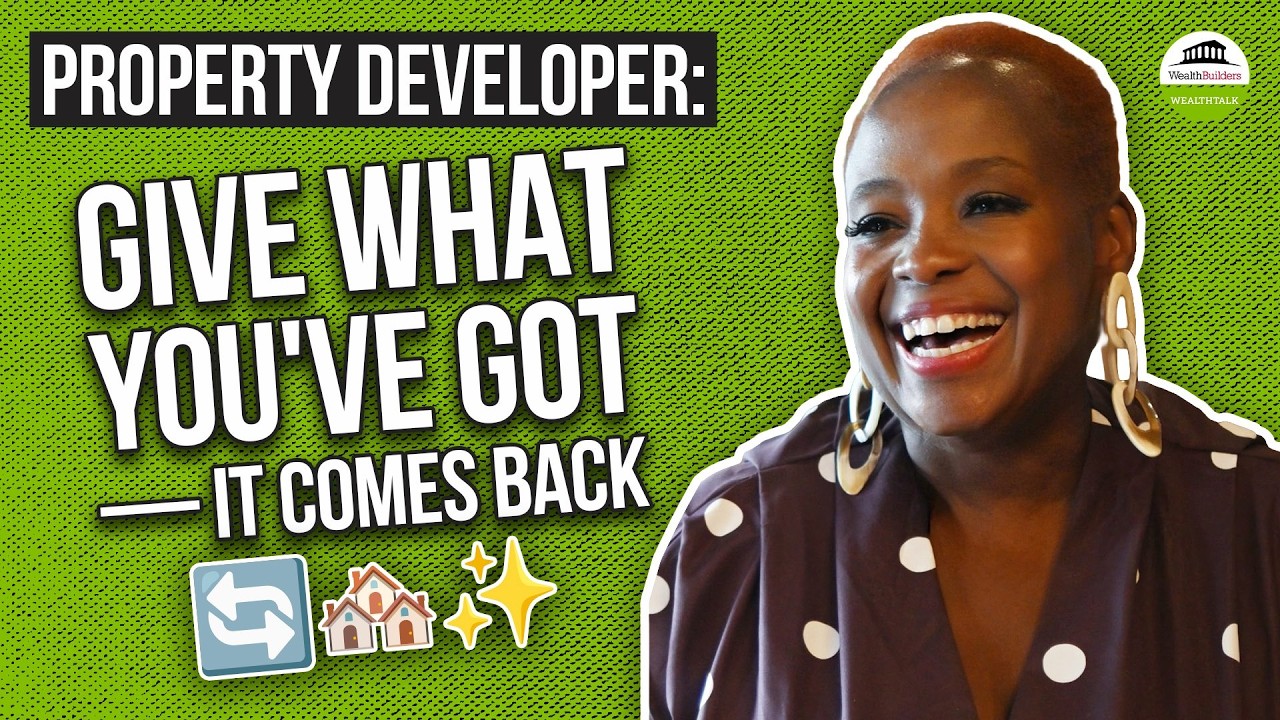
Profit and purpose, they almost go together because if you've got a purpose and you're thinking of about helping somebody else, that drives you. And then the profit comes because you've got the purpose. What goes around comes around. And it goes back to my mum's saying, you know, give what you've got because it will come back to you. And it does.
speaker-1 (00:23.95)
Hello and welcome to this episode of WealthTalk, a podcast purposefully designed to help you build, protect, and transfer your wealth as efficiently as possible. And I'm joined today by co-host, co-presenter, co-author Bimbi Fernando. Bimbi, you've got some great news to share, haven't you? Yes, well, it's nice having that introduction, but co author as well. So here here it goes. You know, so this is my second book.
Purposeful Retirement. I know I shared with you my first book, and this is a book which is very very much linked to crucial themes as far as I see it, as far as wealth building is concerned. kindness, which I know we've talked about quite a lot. And I know that you've kindly asked me to join you as a co host because I I feel that purpose and kindness has a role to pay.
role to play in wealth building. So and and and a role to play, I suppose, as well. That's a bit of a Freudian slip there, which you know, have to but we've got a wonderful guest today, which I'm sure we'll talk about. but people before profits is is one of the crucial phrases. That sounds like it resonates with purpose and kindness, doesn't it? It does indeed, yes. So this is the wonderful Lorraine Thomas. Absolutely. I know Lorraine. Lorraine is a client of wealth builders, actually.
And introduced also by Sheila Smith, who we've had on recently, who is also a wealth builder member. So not that we just like to interview wealth builder members, we don't. But there are some things that truly I think r really do resonate with with the community of people who share common values. And thanks to you for sharing the common language, keeping the the sort of IP or my IP anyway, going strong. And I thank you for that.
But rather than kind of wax lyrical about what's to come, why don't we go and have a listen to your interview with Lorraine Thomas?
speaker-1 (02:26.574)
So welcome, Lorraine. Can I just do a brief introduction and then over to you to colour it in? Because I'm absolutely delighted to have you here. Thank you for coming to Wellthalk. So you are an award-winning property developer mentor and a visionary founder of A View from My Window. And it's fair to say that you've built quite a successful property empire. And what truly stands out for me.
is your commitment to people before profit and social housing. So that's the things that have jumped up with me. And that's why I, in my own position, would be very, very keen to hear more about what you're doing. But would you be able to colour that in, please, and just talk about your experience and property as to why you're here now and and and how you got there, please. Well
speaker-0 (03:18.478)
Well, first of all, thank you for having me, Bimbi. It's a pleasure to be here. And I'm always excited to talk about what I do, particularly around that ethos people before profit. That's really, really important because that runs through the whole DNA of the business, me, and I guess where I go in the future. Backstory, I never actually knew that I was going to be a property developer. I didn't even know what a property developer was.
I'm an accidental, if you like, property developer, investor, whatever term you want to use. And I suspect we'll come onto it more later, how I arrived there. But I'm gonna jump straight into development because people say they're a property developer. And I think, what what is that? Is that actually ground up? Or does it mean that you go to auction buy and knock walls down and and
create more space and make it beautiful. Is that a developer or is that an investor? Anyway, my take on it is I became a true developer when I was dropping my sister home one evening. If anyone knows my sister, she's very much glass half empty. If the sun is out, Maureen will be, it'll rain in the next five minutes, you know? So she's always got this whereas I'm always like, anyway, Maureen spots this piece of land.
And it's just like at garages with sort of land in front of it. And she says, Wouldn't it be amazing to build a house on that? And I looked at it and I thought, did Maureen actually say that? And as I drop her off, she goes, Maybe Lorraina might ring them up and check out that board. And I said, Yeah, Maureen, do that. So we never spoke about it for a little while. In the background, I thought,
We're on to a big thing here. Forget one house. We could build maybe 10 on this. And I remember the mayor saying, build up, build up, you know, because there was this lack of housing. And I thought we could go for this. So I spoke to Dolores, who became my business partner. Backstory, we'll cover that later. And she said, Why don't we just go for it? So we were so like we were.
speaker-0 (05:39.53)
We were not seasoned developers. We didn't know anything about developing. We just thought, we're just gonna go for it. We're gonna put an offer in. And I remember the agent saying, All the offers that we've received are conditional. And we went, Well, we'll go unconditional then. And off we went, not even realizing what I mean. And I think the the asking prices were around 450,000 and we went unconditional, 470.
Literally, but I had a hunch, I had a feeling that this had to pass planning because it was just bare and we need houses, and there were loads of houses around it. So this didn't seem complicated in my simple mind. Anyway, through the planning exercise, we went and architects said, you know, you can get six here. And we were like, no, we want to do nine. We're gonna go for nine. Put it through nine, we got it.
Amazingly. And from that point, I mean there was a lot of ups and downs and and all you know, there's a whole story around it. But it's at that point I realized I'm a property developer. I'm actually building ground up.
speaker-1 (06:55.0)
So this is your glass half full sister pointing out to you something that hadn't even occurred to you. So that came out of the blue. but second thing is in in WealthBuilders, we talk a lot about education and education is quite crucial to anything and going through quite a rigorous program, education support, due diligence, guided action. That doesn't strike me that you
had too much of that in in in this particular thing. Was it gut feeling or how much knowledge did you have at that point?
speaker-0 (07:33.068)
Right. So the timing is is crucial for that question because it was at that point Dolores and I went, Holy moly, we better go and get some property education. We joined, I'm not gonna name them, a really good group of people, and we'd gone to some property exhibition, I think it was an Earl's Court, and they were talking and we thought we signed up. But what we found actually during that education.
was we knew more than we thought we knew. Because previously I had given up my job to care for my dad and I kind of fell into property. And Dolores and I went off to auction. So we already had auction experience. And I say auction experience, we made a whole load of mistakes. We'll come on to that. But because we knew that property's a risky game, there are some risks, finance, all the other things like you say,
Due diligence, all of those things come into play, particularly if you're buying an auction. We were a little bit savvy, but had no notion of buying an auction to develop in. They are two hugely different things. And that's why I say I start with, I could call myself a true developer because all the hurdles, all the lessons, and during the education and
Honestly, it is important to get education. It really is important because we met. And why it's important, not so much exactly what you're going to learn, but it's the people that you meet in those circles, the connections that you make. And the network started to grow. So we started to connect with builders and architects and quantity surveyors and you know, people that you need if you're going to start doing development.
So it's a really good way to easily quickly get connected and start your journey. And with the right, you know, because they're gonna be people in the room that are more experienced than you. What we found was people were actually asking us because we'd gone to auction, what was our experience? So we found that it was actually a bit of both.
speaker-1 (09:44.056)
So you you were sharing your knowledge as well as asking others. I mean, we've also got this great phrase in WealthBuilders, great sort of mentality of being part of community that you imagine yourself crossing over a bridge where you put your hand out to the person in front of you to help you across the bridge, but also turn around and almost have more joy in turning behind you to pull the person behind you, you know. So it's it it's great to see that you found a similar community. Now, one thing that that does strike me.
Is you're quite a unique person, all right. not many people would drive past a plot and listen to us is the same, we should develop on that and actually pick that up and run with it. That must come from somewhere, okay? So I wonder whether you could just tell me whether you'd really interested, for example, to hear about your youth growing up and perhaps your family influences.
speaker-0 (10:41.162)
So when I was growing up, first of all, when my parents first came to this country, and I talk about this all the time, nobody would rent them in me. My mum and my dad ended up sharing a room with two other couples, a room with two other couples. And so it's important that I view from my window, and everything I do actually remembers that. And that's why.
We now rent to people who are disadvantaged, who don't tick all the boxes. Increasingly more difficult now with the new rights and the act and all of that. Increasingly difficult. But there is still a thing around giving people a chance and helping people in their darkest hour. And when I was growing up, Morin and I, my sister, had to share a room.
My dad managed to save, eventually come out of his situation. He saved Barclays under the bed because he he couldn't get a bank account. And he put the money together, bought his first house. It was a three-bedroom house. That's where we were born. And then when we moved, they bought a five-bedroom house. No, it was a six-bedroom house, but Moyne and I still had to share a room. And we always thought,
what's going on here? Because like there's enough room for all of us. We can all have our own woman. But my dad believed in opening the front door so that anybody who was ever in a situation that he was in, they could come and stay with him until they found their feet. And so we were always very used to lodges and people living with us for very like short periods of time in and out and and and then the other side of that, mum would cook up a storm.
So on a Sunday, she'd open the front door, she'd cook, just open the front door, and people just like wander, wandering, and come and eat with us. It was the most bizarre thing. When I talk about it now, I'm like, I actually grew up like that with people just wandering around, like eating or living with us. And so it's always stuck with me. And I guess some of well, all of what runs through me is about giving. And
speaker-0 (12:56.416)
recognizing that when you've got a little bit, it's a lot to somebody else. And I still carry that today. So my little bit that I have, I want to share it with others because I mum's saying, you know, the more you give is the more you get. And so we just kept giving. But my coach tells me now that actually Lorraine, it's become a problem because you constantly give and you you you have a block about receiving. So that's a whole other issue.
But the the main thing is about looking and supporting other people. So that's kind of the background to why I'm mentally a little bit quirky.
speaker-1 (13:36.366)
Could you tell us a little bit more about your mother? She sounds like an incredible lady to inspire you with that that phrase. Is that
speaker-0 (13:43.96)
She really was. So I had my mum only for 16 years. She died when I was 16 of cervical cancer. And actually, she didn't tell anybody she was gonna die. But I think she knew it. She was she was losing weight. And what she'd do is she'd put on loads and loads of clothes to sort of bulk up. And then one day I accidentally sort of like just burst into her bedroom and I saw her and she was changing. And I was, Mum, you've lost so much.
speaker-2 (14:12.055)
What?
speaker-0 (14:13.356)
I said, look, we've got to get you to the doctors. Got went to the doctors and they diagnosed her with cervical cancer, which today, if you find that, it's curable. But she just didn't say it to anybody and she just kept on. You know, my mum would, my dad bought her a washing machine and she never took it out of the packet. She continued to wash the clothes by hand and looked at the washing machine with the plastic on it. So she was a real, she was just a real Caribbean.
Woman who had was had staunch values around we had to sort of dress up on a Sunday for dinner, we had to put our best on to sit around the table, meant to slice the Q, the cucumbers and the tomatoes in a certain way. And that was like it was really well presented. And and she was very well presented. And there were certain little things, nuances that I got from her that, you know, the way you look matters, and the way you present yourself matters. And
Always offer before you yourself. But then she used to have this quirky little phrase, she used to say, never leave your purse empty, because she'd always say, give, leave your purse empty, but on the other hand, never leave it empty. And I couldn't work out what she was on about. What she was saying was that you give your last penny, but it will come back to you. So, and it took me ages to realize this, long after her death.
But yeah, she had these little phases and and it's weird because Maureen and I are so so different, but Maureen has her own wonderful quirky ways. So who
speaker-1 (15:48.47)
How do you defined your entrepreneurial spirit then?
speaker-0 (15:50.958)
I mean, my dad was lit literally, I don't think, you know, dad couldn't spell the word entrepreneur. but he was. He clearly was, because he would like rent the rooms for like little amounts to help people out, not realizing that actually that was paying his mortgage and helping him and, you know, and then he would sort of allow people to rent them at a low rate so that they could save, so that they could then buy somewhere, so that they could.
move on and you know all of that. So I it definitely comes from him and the generosity comes from my mum, I think, and the entrepreneurialism comes from my dad.
speaker-1 (16:34.36)
That's lovely to have that that background. And you know, sixteen years old, you you lost your mum. So clearly that was a defining time for you. And that probably allowed you to to look at different things. So what jobs and roles did you have after that then?
speaker-0 (16:50.222)
So when when I lost my mum, I actually didn't want to live. I remember thinking, you know, I don't want to go to college. I don't forget university. I just don't want to do anything. I was the only person at the age of 16. Everyone around me still had mum and dad. And I was almost the girl who lost her mum. So everybody else became my mum. And everybody else's mum became my mum. So I had several mums, but not my own mum.
I remember thinking I don't wanna I don't wanna work, I don't wanna live, I don't wanna be here, I don't want a job, I just don't want to do anything. Anyway, I eventually got a job in in the city, Scrutton Street, which I passed last week in EC2, and it was my first ever job making up company names in a as a formations agency. So I'd I'd put like glasses and phone together and call it Glass Phone Limited.
And it was like you could buy these from off the shelf. 99 pounds it was for the Mem and Arts, and it was a ready-made company. So I guess I had kind of that it for a very long time in the back of my head. So after that, I moved into payroll. I I've had several jobs where something happens in the job, and it always happens. The boss leaves, and I end up being the boss, not even knowing how to be a boss. So I I
I was in a payroll, my second job, a payroll job. I was just like doing the clock cards, handing out the pay at the end of the week on a Friday. And then the boss left. I became head of personnel. I was then doing like everything, the tax, everything to do with HMRC, the money, the this. And I'd sit in a little room on my own. Nobody would speak to me because they all knew I knew what they were earning. So the whole company knew that I knew what everyone was earning. So no one would talk to me. Whenever we had socials.
No one would be want to be on my team. We went, we had a night out doing bowling. No one wanted to be there because I knew everything in the company. And I I just land, I just seemed to land these roles where they were hugely responsible. Somebody would go and then I would be thrown in the deep end. So I've always been thrown in the deep end in any job that I've had. So I've it's sink or swim.
speaker-1 (19:08.194)
So being uncomfortable is quite common for you, sinking or swimming in that scenario. And j so you you you enjoy that and you enjoy the challenge.
speaker-0 (19:17.964)
My best when I'm under pressure, when I'm seriously under I mean, I I launched Prime, which we're gonna come on to on Wednesday. And on Sunday I was in panic mode going, I'm launching this. And I don't know. And it was amazing. I I think I I'm one of these people who I just seem to get it. But if you give me a lot of time to plan, I'm gonna wait till the last minute and do everything in the last minute. I'm not a pace yourself and do it. I'm a
Give it to me, you know, it's gotta be cushioned because then I make decisions really quickly. I don't fluff around. and I I think that's partly what what's in the property game as well for me, that make a decision, go for it, whether it's an auction or whatever. And what's the worst that can happen? We're gonna fix it. That's the way I see life.
speaker-1 (20:08.664)
So you so you had positions of responsibility in the city, from the sound of it, and you know, even roles, waiting for the boss to leave so that you can step into their shoes. That's how how I how I'm visualizing you, you know. So I'll be a bit worried if you join my organization and then I'll be thinking, Okay, does that mean I'm about to leave and I step in my shoes? But something must have changed from you to go from that to there must have been some hiatus for you to end up
With property development. What what happened?
speaker-0 (20:40.486)
I spent 20 years in law firms and in marketing and business development and I evolved and dad I was really comfortable in my last job and then my dad became ill with Parkinson's and dementia. And because he had been mum and dad for so so long, I felt it was my job, my responsibility to give up my role and care for him.
So I made the decision and I said, right, that's it, I'm off. And I didn't know how I was going to pay my mortgage. I was going to be earning £62.50 a week on a carer's allowance. I didn't know how ends were going to meet. But this little voice in my head said, Lorraine, it will be okay. It will be okay. I followed that voice and I gave up my job, became a carer, a full time carer. Now.
I'm going to honor all those who are carers because it is the hardest job in the world. And for me, dad was sleeping in the day, waking up at night. So I just wasn't sleeping. And this went on three, four months. I was like, is this my lot? Is this what I've become, a carer? I'm just exhausted. There was no respite, none of this. And and I just thought, my goodness, it is this it? And then I received this email from a friend.
Who is now my business partner, and she was looking for somebody to house young, young, vulnerable adults that were in the care system. I jumped at the chance and said, yes, I responded in the email. Yes, I can do that. The email wasn't meant for me, it was meant for another Lorraine. I call it serendipity. I responded, and within weeks, I was housing vulnerable young adults. I was really good at selling into.
To estate agents and other developers and anyone that had a property that would rent it to me, I was there saying, You're gonna be doing a good thing. They bought into the concept of housing a young person. Great. But the accommodation wasn't good at all. It was actually really bad. And they were putting lots of stipulations on us, you know, like we want three months' rent up front. It was like huge. And we thought we could do this better. So off we went to auction.
speaker-0 (23:04.184)
Dad had said, look, I've got a little bit of money put aside for you and Maureen. If I give this to you now, promise me that you will help Maureen when you do, when you, you know, you hit the big time. So he gave me my I almost had my inheritance before he died. He gave me this part of money. So I had my half to go to auction, and Dolores had her half. And we bought a property, made every mistake going like literally, like
We didn't read the special conditions. It went on and on and on. And so we went back, made different mistakes, went back again, made different mistakes. We were learning all the time, but just making different mistakes, different things coming up. So we're truly can call ourselves, you know, we know a lot about auctions now. We're professionals because we absolutely, I mentor on it now, I all of that, because I learned so much from my mistakes.
And I wouldn't want anybody to make the same mistakes that I made. So that's why I became a mentor. Back to the question of how did I arrive in property development? So we bought lots of properties at auction, we housed vulnerable young adults and also people that were disadvantaged, and it really just took off from there.
speaker-1 (24:23.118)
I suppose many people who are who understand a little bit about property development is is making the deal stack. And when you're trying to do something with there's a challenge to try and make profit because there's a lot of money at stake and and often it's borrowing significant amounts of money for that, being through bridging finance or other forms of development finance or both. And it's quite hard to square it up, I would suspect, with
social housing and providing good homes for vulnerable people. So how did you navigate that particular challenge, especially coming from the background that you had, where you were a carer one week and then sort of progressing into property development? How did you navigate that?
speaker-0 (25:12.184)
So the first thing is I want to clarify that term social housing because when people think about social housing, they think it's just people that you know, they don't work and they get a grant from the government and the the government pay for their housing and all of that. Social housing. The social housing that we do is people do work. They work two, three jobs and they struggle to make ends meet.
So, you know, we're renting at the lower end. The property's amazing. But and why shouldn't they live in a nice place? But the rent is lower. And it's almost like I don't want to say it's a loss leader. It's not. It's more of we're giving people a chance to look at aspiring to do better for themselves. So we might make money out of yeah, development and building.
Successful companies need to make money. For me, there needs to be a balance. And I think that profit and purpose they almost go together because if you've got a purpose and you're thinking of about helping somebody else, so that drives you. And then the profit comes because you've got the purpose. What goes around comes around.
And it goes back to my mum's saying, you know, give what you've got because it will come back to you. And it does, it comes back to us in Joe's because we've never got like property that's like we're struggling to rent or any of that. And people come to us because they know that it's a fair rent, we're giving them a chance, they do their best to pay the the rent. They they like I say they work two, three jobs. And if they can't, and there have been times where
They've struggled and they've gone, I can't can't pay the rent. And we've been creative and gone, well, you can paint. So why don't you paint that house for us or paint that room or do that? You can do gardening. So why don't you do that? And so we come up with creative ways so that they feel they haven't lost their self-esteem, but they're doing something they're earning. And they're just doing something different for a little while until they kind of get it back together again. And then I I I guess that goes back to
speaker-0 (27:29.89)
Where I come from.
speaker-1 (27:31.214)
So is that the essence of view from my window then?
speaker-0 (27:34.35)
So Dolores has a a massive company herself, which continues to support vulnerable young people coming out of the care system. And the bit we have together is the bit that houses, houses them. And then my bit, view from my window, is is kind of more about mentoring. It's about creating opportunities for young people to get onto the ladder. I have a learn, earn and own program where they can.
put some money in, it's like a two or three together, and they've got a a shareholders agreement and they're building together. So they they're on, you know, they're owning because I'm a strong believer in owning. I know that the clocks have changed and many young people they don't want to own own at the moment because they're going, well, there's so many things, so many, there's red tape everywhere, and I just don't want it. But I still maintain that ownership, particularly in the UK,
is the way to go. There's a certain way that you are treated if you own. So
speaker-1 (28:33.838)
Some
speaker-1 (28:39.992)
You know, you've been recognized with awards, but I suspect your ambition lies beyond awards and a deeper purpose. And I know that you've been busy behind the scenes in the last month, culminating in something this week. So would you like to tell us what you've been up to recently?
speaker-0 (28:58.072)
So awards are great because they help you to recognise where you've come and that you get you get a chance to look back at your business. But my greatest accolade, I think, has to be a medal, a Lancelot Andrews medal. I was awarded it through services to the community. That's kind of like the ethos where prime started. So I wanted women to feel what I felt when I was awarded that medal for godly services in my community.
What I did during COVID was I created like it wasn't a podcast, it was more of a reel, if you like. And it was bringing together voices that people in my church and my community had heard before, but we couldn't gather. So we couldn't go to church, we couldn't go to the community center, couldn't do any of those things. And so I would ask people to just
Record on their phone a little song, a little message, a little prayer, anything that they were thinking about. And I'd pull it together and it became this little reel of like goodness. And people were dying, like thousands of people were dying. And so many people in our community lost family, friends, etc. And they wanted somewhere to go. Whether they were religious or not, they wanted something to listen to, some someone.
To have acknowledged that they were in this pain and that their loved ones had gone. And so it might have been a prayer for somebody, or it might have been a young child playing the triangle, or it might have been the priest saying, doing a chapter of a verse, whatever. It all came together. Anyway, this thing went vi viral to the point that the archdeacon got involved and he said, Can I come on and do a little thing on your thing? And he recorded stuff. Then other archdeacons until
It got no noticed and yeah, I got awarded this medal, which is amazing. So the point I share that is because we're never done and we don't know what's ahead of us. And Prime is all about successful. It's not for everyone, it's su women who have made success, be that in property, in their business, whatever business they have, but they are.
speaker-0 (31:21.122)
perceived as successful because they've made it, they're entrepreneurial. And they're looking around going, what next? And and and why am I here? There must be something else. I'm on that last run, but I I want to leave an impact. I want to affect my community. I just don't know. I don't have the space. I don't have the connection. I don't have the time. I don't have the finances, whatever it is. So prime is
About capturing that. And I don't know anybody else that's doing it that's thinking about okay, how do we create a legacy? Leave a lasting legacy. The legacy starts now. It's not legacy, isn't when you're dead, legacy starts now. And so it's creating something that's gonna impact not your clients or your friends and family, it's wider than that, it's your community, it's country, it's a nation. How big?
You know, you could go as big as you want to. It excites me to even talk about it. And that has come from this Lancelot Andrews medal that because I had no idea the impact I was making in my community. People were like, I I listen to this every Sunday morning. I listen to it. And I was like, wow, I I didn't even know I was doing that. And and that is what when successful women switch their hand to something incredible, they can make
such a difference without even knowing how much of a difference they're making.
speaker-1 (32:55.726)
That is brilliant. So Prime and that that launched did it this week? Is that
speaker-0 (32:59.618)
I watched on Wednesday, we had a discovery day. It was awesome. And you know, the thing is, I still have doubts about myself. So I booked a room at King's Cast. It was a lovely room and a nice hotel and blah blah. And it it sold out. And I was kind of like, see, that's what happens when you doubt yourself. If I had gone for a bigger room, I would have then like, my goodness, I can't fill it. So I worked for the small room to play it safe, and then I sold out. So, but you know, it gave me the confidence that I've got to do this again.
It's awesome. Women got a chance to think about what's next. Think about, I I want to create this, but it just feels too big for me on my own. But with the right peer advisory community support and the and the connections, it's possible. And I want people to do this and blow people's minds and win awards for it. Because I know that these are going to be incredible projects.
speaker-1 (33:54.956)
So wonderful to to hear about that. I mean, what what you're talking about does resonate with respect to the wealth-building model of the different levels of finance and income, you know, the asset income. So we so we talk about insecurity before security and then independence. but what you're talking about is abundance and then actually legacy impact, you know, and so that is absolutely wonderful to see how.
You've you've used your wealth-building throughout your time to to really enjoy what you're doing, but now you're actually thinking beyond independence as to these sorts of impact you have. Quick question for you, just as a challenge, you're focusing on women. you know, what what have us men done that's wrong? You know, why women?
speaker-0 (34:44.141)
Safe space. So let me teach you a thing or two, Bimbi. So I used to be, I used to mark CIM papers. I was at CIM examiner for a little while, chartered Institute of Chartered Institute of Marketing. So at heart, so I have a master's in marketing and marketing runs through me. So working in law firms, it was getting the the lawyers to think about.
How they retain their clients, how they get more work out of their clients, how they how they profile themselves, all of that. And so the one thing I always used to say is don't do scatter gun approach, because it's not gonna work. Focus, focus, focus. Go for a target market, go for a target audience, shoot, and it will land. Don't do scatter gun and just.
Wish for the best and hope. You can't serve everybody. And that's why prime is not for everybody. It's for leaders who are now thinking, what can I give? Because I've made it. What can I give? And so that's why it's just for women, because it's low-hanging fruit for me. I'm a woman myself. I understand how we tick, how we roll, how we flex. And so it's easy to target it on women first.
But I also recognize that men have some incredible things that they could be doing too. And I'm I've spoken to three or four men, yourself included, Bimbi, that have blew my mind with projects that they are thinking they want to bring to the world to create impact and leave a lasting legacy for themselves.
To have achieved it, but more so what it's gonna leave behind. So yeah, that that's the only reason. It's about focus. It's about let's see how it goes first with one stream, and then of course I'm gonna roll it out into there's gonna be prime man. So
speaker-1 (36:52.364)
Yeah. Fantastic. Well look, what a wonderful place to to to leave it. So how how could people how could our listeners connect with you or find out more about the work you're doing with Prime and View from My Window and and Lorraine Lorraine Thomas?
speaker-0 (37:07.914)
LinkedIn is probably the easiest. View from my window on LinkedIn, Lorraine Thomas. I also have Instagram, which is View from My Window. It's all underscore view underscore from my but if you put in view from my window, I'll come up.
speaker-1 (37:23.266)
We could also share anything in the in the show notes as well with with our audience. So yes. Well look, absolutely wonderful talking to you. Thank you so much for for talking about your your background and your your careers and actually sharing, you know, your your mistakes as well. You know, the the humility that it takes from that. But actually that
demonstrates the entrepreneurial spirit to my mind, the fact that you learn from your mistakes. You don't sort of just nip your wounds and stay in the corner. And and and it's just incredible to see how you have inspired and helped many people. But what I'm really excited about now is is the pleasure you're going to derive from what is what is ahead of you. So congratulations on on that and good luck with that. And I'm sure we'll be hearing more from you
At a at a later date. So thank you again, Lorraine.
speaker-0 (38:16.664)
Thank you for having me. it's been a pleasure talking to you and see you on the other side of Prime.
speaker-1 (38:27.182)
Well, that was a fascinating interview, Bimbi. How was it for you? It's a great position to be in in a seat talking to people about what really makes them passionate about why they're building wealth. And I'm also quite a nosy person, as you may have discovered. I do like asking additional questions and just going a bit deeper and behind the person that is presenting themselves normally to the external world and
And she was very gracious, I'm sure you'd agree, about sharing a lot of insights into what caused her to go down the journey she went down, really. Yeah, well, it's it's always good to really get the Warts and all story because then you get the true person and that's that's fascinating to hear. And I know that she shares a sort of a common theme with me as well, Bimbi. Do you know that? She posted recently, on LinkedIn a picture of her father.
And she said she's put her entire successes, you know, down to how her father influenced her. And I dropped her note back on LinkedIn saying, you know, we share a common source of inspiration. not that we need a catalyst of tragedy or anything like that to cause us to move and change direction, but her catalyst was her father. My catalyst was my father.
And I'm just curious really, for most people, if you're listening now, you know, if you're serious about building your wealth, you probably need a catalyst because without the strength to start you off and then keep you going, when sometimes things go a little awry, which they do from time to time, right? You can always get derailed on any journey. That's the natural order of things. It's never all the traffic lights on green.
When you set off on a journey, and nor will they ever be. So yeah, so you know, I I share that with Lorraine. And do you know what? I just love her unbundled enthusiasm. It's she's unstoppable, isn't she, really? She's she's definitely a a character beyond her size. She is an irresistible force, actually. And and what I love about her is how she she genuinely believes and lives the values of putting people before profits. And that stems from her.
speaker-1 (40:50.776)
Parents who are immigrants to this country coming over from Jamaica. And it stems from the fact that the father unwittingly became an entrepreneur by sort of renting out rooms to other people. And they discovered that it was a real problem for people, you know, which she shared with us. people of our color weren't allowed to stay in certain places. And yet they opened up the house for this, and she had a larger house than what they needed for the family, but still.
she shared with her sister. And I just thought that was just wonderful. And if that's instilled from that age, that is amazing. And then hearing about her mother as well and the sorts of terms that her mother would come out with quite remarkable. You know, sort of give every last penny you have, because it will come round and come back to you eventually. And so there is something about the right sort of charitable karma that comes with this. And it took her a while to to understand that.
But certainly she lives those values. Well, she does, and she also lives life on the edge as well. You can hear from her story, she takes risks sometimes, what appear to be not necessarily due diligence risks and the way that WealthBuilders sets out sort of, you know, the various steps to well just go for it. And and that's that's typical. Although she does have a steadying influence in Dolores. They're very definitely the opposite to Lorraine, but they're a good team and that was good. When I met them in London
a couple of years ago, I think, when I met them. And what's your take on her latest venture? Wow. Well, that is really exciting. The fact that she wants to inspire other professional women and give them a safe space to do so to really find their own way of making a dent in the universe. I just feel that that is wonderful. You may have noticed I did sort of put in a cheeky question about why it's only for women. And she put me right, I think is fair to say, but I understand that, and that's a great lesson as well.
when you're setting up a new business to actually start with a narrow niche and a narrow focus before diversifying and making it wider. Not unlike the lesson we give in WealthBuilders, which is focus your way to financial security, then diversify your way into wealth. So so the lessons are, you know, relevant, I suppose, in there as well. Well that's great. Well listen, you know, you've you've done what, a couple now? Yes, this is a couple with you. This is my first
speaker-1 (43:17.016)
First person that I'm actually interviewing, the first real life person. Not that you're not real life, but it probably doesn't count when it's you and Christian. thanks. Yeah. But you know, it's good good that you enjoyed it and it it showed and I enjoyed your questions as well. So I think the podcast is in good hands with a combination of you, me and and Tracy, who's doing her bit as well for Women in Wealth. So Bimbi, thanks again for your time. thanks for sharing and
Good luck with the book. And to everyone listening, we look forward to seeing you again on another episode of WealthTalk. And until then, everyone, see ya!
speaker-0 (43:58.382)
We hope you enjoy today's episode.
speaker-1 (44:00.568)
Don't forget that we are constantly updating our resources inside the WealthBuilders membership site to help you create, build and protect your wealth. Head over to wealthbuilders.co.uk slash membership right now for free access. That's wealthbuilders.co.uk slash membership.
Episode summary
In this episode of WealthTalk, Bimbi Fernando speaks with award-winning property developer, mentor and founder of A View From My Window, Lorraine Thomas. Lorraine shares how she moved from a successful career into property, housing vulnerable young people and building a purpose-driven business.
She explains how her parents shaped her belief in generosity and opportunity, why profit and purpose can work together, and how property can create meaningful social impact. Lorraine also discusses learning from mistakes, the importance of education and community, and taking action before you have everything figured out.
Kevin Whelan and Bimbi later reflect on Lorraine’s energy, resilience and entrepreneurial spirit. They discuss how Lorraine’s story demonstrates the importance of taking action, learning through experience and remaining open to unexpected opportunities. Together, they consider how Lorraine’s example challenges the idea that wealth building is only about financial gain, showing instead how business, community and social impact can be connected.
Episode notes
- How Lorraine went from a career in law to caring for her father and becoming an accidental property investor.
- How an email sent to the wrong Lorraine led her to housing vulnerable young people.
- How Lorraine and her business partner learned from mistakes while navigating property auctions.
- Why education is as much about building the right network and community as gaining knowledge.
- How Lorraine's parents shaped her entrepreneurial spirit, generosity and belief in giving others a chance.
- Why she believes profit and purpose can work hand in hand.
- How Lorraine uses property to support people facing difficult circumstances while preserving their dignity.
- Why wealth building can go beyond financial independence towards impact and legacy.
- How a community initiative during COVID led to Lorraine receiving The Lancelot Andrewes Medal.
- How PRIME helps successful women explore how they can create a bigger impact.
- Kevin and Bimbi's reflections on Lorraine's entrepreneurial drive, risk-taking and willingness to take action.
- Why finding a clear focus and niche can be a powerful starting point when building something new.
Resources mentioned in this episode
- The View From My Window: Grace, Grit and Purposeful Property
- Lorraine Thomas on LinkedIn
- [BOOK] Purposeful Retirement: Find Fulfillment in Later Life
- WealthBuilders - Build, protect and transfer your wealth
- WealthBuilders Membership: Free access to guides, webinars, and community
Listen on Spotify, Apple Podcasts, YouTube, and all major platforms.
Next Steps On Your WealthBuilding Journey:
- Join the WealthBuilders Facebook Community
- Schedule a 1:1 call with one of our team
- Become a member of WealthBuilders
