Families & Children, Legacy & Retirement Planning, Protecting Your Wealth
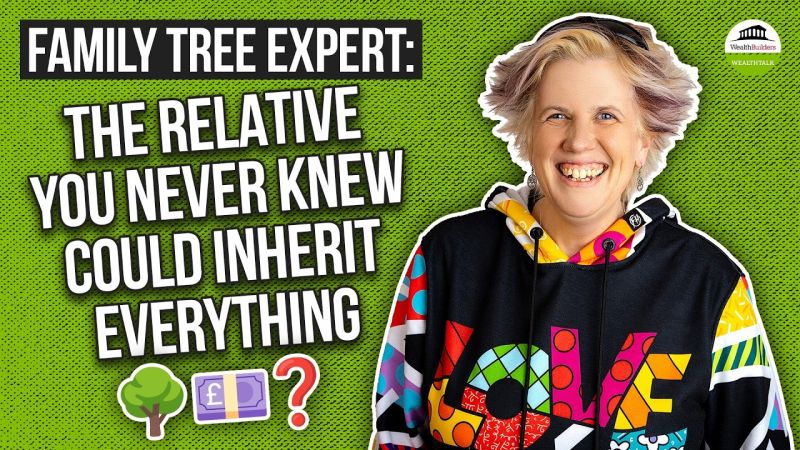
How Genealogy Can Help Protect and Transfer Your Wealth with Kirsty Gray
Transcript
speaker-0 (00:00.076)
If someone's written a will, great. But who is that Matthew Smith in 1987 that was written in Olga's will? We have an address, but of course, I didn't know if Matthew Smith was 9, 29, 49, or 79. Or so-and-so has passed away and someone walks into a solicitor and says they haven't left a will. We can literally generate the whole genealogy of who should be entitled in his estate when people don't live after their wealth with you.
speaker-1 (00:31.47)
Hello there and welcome to another episode of WellTalk, the podcast that shows you how to create, build, protect and transfer your wealth. But I've got a guest with me today who makes me laugh a lot and has done me a great favor as well, which I'm going to share with you. Her name is Kirsty Gray and she has a wonderful business called Familywise and you're going to tell us all about that. And there's a clue for those of you who are watching in this wonderful tree behind us. So, Kirsty.
Do your better introduction than I've given and tell us a little bit about who you are and what you do.
speaker-0 (01:04.75)
you so much and thank you for inviting me to be on the podcast. I really appreciate it. Yeah. So I'm Kirsty, Kirsty Gray, and I'm the MD CEO, founder, call me what you will, of FamilyWise Ltd. I decided in my infinite wisdom in 2012 that I would start up my own family history company, hence the tree. So you do family trees and inheritance work, help people to find out who they were, crack or sort out mysteries in people's histories.
crack brick walls down and things like that to really help people to understand where they come from or to help people find people that are missing in their lives or possibly people that they didn't even know that were out there and make sure that money goes into the right hands rather than the wrong ones when people die without leaving Wales.
speaker-1 (01:47.918)
Which is hugely interesting from the point of view of protecting and transferring wealth. But I think there's a bit of this as well we should explore about the living. I love the phrase you used there, mysteries from family histories. And you helped me solve a mystery, didn't you? Because a little story that I would tell about my wife who was in Ireland once, who was with a family member of her sister. And my daughter, Holly, was unwell at the time.
And she went into the local hospital and the woman said, what's her name? She said, Holly Whelan. And my wife started to spell it. And the lady said, sure, you don't need to spell Whelan over here. We know exactly who you are. I didn't know who we were. And I meet people when they say, Kevin Whelan, there's got to be some Irishness in there. And when I met you and I thought, what a great woman to meet. And I said, could you help me with that mystery?
And you can actually, for those watching, you could probably just show a little bit of what you did for me, couldn't you? So this, ladies and gentlemen, you can go a little bit closer. Not too close, not too close, is my family tree, which goes back, way back to, when was it, 1840s?
speaker-0 (03:03.086)
Yeah, so this section up here is your Whelan line and we've got it back to the 1840s. We don't know where in Ireland at the moment, but it's definitely Ireland. So I was just saying before we came on the podcast, that we'll probably need to purchase a marriage certificate, which is nice and easy when you know how to be able to work out who Michael Whelan, which is the top of the tree. Michael is a common name in your family. Your grandpa was Martin Whelan. His father was Michael Whelan. His father was Michael Whelan.
Yeah, good naming patterns. So yeah, we'll probably need to buy the marriage certificate at the top, which was in Sheffield to figure out that next generation back. And probably there's not enough space on the page either in the frame.
speaker-1 (03:47.48)
But it's nice to know that it did go back to Ireland. And I was shocked and surprised that there were so many Michaels. And guess what I call my son, one of my sons, Michael. And I did not know that history. So it's fascinating. So you have brought a little bit of joy into my life, even though it's not going to help me build my wealth or protect it in any way. But it makes it feel good. There must have been a history for you. So what was the starting point?
for you to get deeply fascinated and I can tell you're so enthusiastic about it. And we'll get to how we can help with wealth building and protecting in due course. We'll start there for you when you first discovered your interest in it. How did that happen?
speaker-0 (04:29.654)
I was very, very young, my grandfather and grandmother on my mum's side, so her parents moved to Tenerife in the Canary Islands when I was just under five years old, I think, about four five, and they moved over to Tenerife, north of Tenerife. And my grandpa had done quite a lot of genealogy. So we're talking eighties here before we had Ancestry and Find My Past and all the other things you can now access online, because of course we didn't have internet then either.
So he'd just gained all of this information, gathered this all together from his own family history and his own members of the family that he'd, we've got, we've literally got letters from the late 19th, late 1800s, betwixt and between several members of the family writing, one had obviously asked the questions and the other would then write back for the answers.
So I've got my great-great-grandmother's handwriting when she wrote to her daughter answering her questions. Some of the history in those letters dates back to the 1700s because obviously it was the 1800s, it's only 100 years back, and so they had a lot of knowledge that was still retained. So I grew up around family history.
My mum and I used to do it quite a lot. She wrote it out in pencil very neatly. And, you know, we had the dates of birth and the dates of death and things like that. And we had photographs as well. We had an aunt on one side, my mum's side as well, who had a very thick leather bound photo album, again, from the 1800s. And we would go and visit her and she would say, well, that's Auntie Sylvie. And I'd look on the tree and go, you haven't got one of those.
So I'd go back home and be trying to work it all out. I mean, this was decades later when I could actually go up to the library in London and things. So yeah, it's been, it's been, I think I've got genealogy in my genes is what I always say. I don't mean the ones I might be wearing.
speaker-1 (06:21.55)
in the very fabric of your DNA, we need to get to DNA, don't we? Because, you know, if we're back and talking about originally with old photographs and then writing things down and then going to the library, how was this whole idea of genealogy moved on then in terms of, you know, how people can access that these days?
speaker-0 (06:43.638)
Infinitely. I always say that I feel very lucky to have earned my stripes the hard way, as in, you know, the stripes you'd have if you were in the army or so on, or police force, because actually, I did it the hard way. I had to go to the archives. I had to take these big books that we had to look at first. mean, now I can just access births, marriages and deaths online. You can even do it for free on various sites, whereas I certainly didn't do mine for free.
and was going up to London on the train and going to the Family Records Centre and all of the other archives, national archives and things like that. So having a lot more access, it's good in many ways for people like me, but it's also a little bit negative because lots of people seem to think that they don't need to pay for it. And then when they get stuck, they realize, they realize that actually they do need a Kirstie in their lives because you can only get so far when you think you know what you're doing.
We have lots of people that say, I'd love to do what you do in terms of coming to work for us. And then I give them the most basic case and they can't do it because everyone sees it as a hobby rather than an actual profession and something that adds value.
speaker-1 (07:54.594)
So would you say that you've turned an initial hobby into a genuine business now then?
speaker-0 (07:59.296)
100%. Yeah, we've just hit over 40 on our team. So we've got people the world over that work for us. We've got a main office in the high street. We're based in Wiltshire in Caen. It's very small market town, so you wouldn't expect to find a me here. But we've got a three-story building. So we've got lots of staff here, but we've also got people that can keep the wheels turning. So if we've got particularly an inheritance case, sometimes we need to work.
quickly if someone's just passed away and we need to arrange cremations, for example, we get involved right at that early stage. I could go home this evening, thankfully, and pass a case over to a colleague in Canada who would still be able to carry on because the time zones are different and they can work on and then they can hand it to Australia to then pick it up after they're finished and then I can pick it up when I come back in. So it's really, really good and that's how I designed it.
We never drop a case and we can work incredibly quickly.
speaker-1 (08:59.586)
Very interesting. And what has been the sort of biggest change in the use of technology, whether used by you or I'm sure you can give individuals who feel like they want to just try and do a little bit of delving for themselves, just what some hints and tips might be. But I mean, you just showed me the family tree there, which I was interested in, would never never been motivated to do it. But you'd be talking about
not more than a few hundred pounds to do that.
speaker-0 (09:31.958)
If we're charging that it's 110 pounds plus VAT, including frame, including delivery. So that's kind of like our toe in the door so that you can go, I'm really interested. And then like we talked about that Sheffield marriage, maybe we'll get that. And then you might say, can you do a bit more? Can you delve more deeply into the wheel inside or whatever other names you might be interested in? And then we've got other products that we can then put on top. But obviously that would be nice to put.
on a wall, we've sent one for a housewarming present for the people who do our payroll, for example, just as a nice they've moved house. So there we go.
speaker-1 (10:07.062)
It's interesting, just given me an idea, is recently we've started working with wealthier families. Within this program, one of the things we do, and it just struck me that you could probably provide some benefit, would be we ask people to create their family's wealth as if it was a company. So it has a life of its own, a sort of force of its own. And we love the idea that they create
the name that has got some meaning for the family. And I'm just thinking about whether or not the family tree idea, you as you describe it, because we always want to know who's the immediate family, but we've never really asked. what's your family's history and where did that come from? And if we want our current family, the owners to be what we call the founders, then maybe they could start there and just
go back and identify with who their family were because there's something deep inside, isn't there, that we want to know, well, there's a whole TV program, isn't Who do you think you are? So who are we? And we're part of the roots and the DNA that came from. So what's your feeling about how people could either do it themselves or would need somebody to do that profession? And what do you think?
speaker-0 (11:31.626)
Yeah, I think, I mean, there's a lot of things that are out there now. Like I was saying, you when I first started, it was much harder. You had to travel to an archive or whatever. Whereas now there are free things as obviously Ancestry and Find My Past are the main two commercials in terms of the commercial subscription sites. So it's much easier to go on there. However, there's a lot of people that managed to put two and two together and make 762 and it doesn't work.
The trees that you see online could be gracious. Sometimes you just go, how has someone even thought that that could conceivably be right? And sometimes there were very, very difficult connections to be made that require a certain skill set. For example, I won't name too much of the name, but there is a lady who's passed away who we've got her death certificate. And I can tell you from her death certificate that she was not born as a lady because I have an alternative name.
So we are now in the world of changing our names for multitudinous reasons, whether it might be a deed poll name change because you didn't like your name, because perhaps it was a surname that was not particularly one you wanted to keep or a first name that you didn't like. So people a lot of the time can literally just completely change who they are. And we can generally work that out. But that's a special skill.
speaker-1 (12:50.702)
I did hear something this morning actually on the radio when I was having breakfast and it was John Cleese, old Faulty Towers, which is not a million miles away from us. he said his real name or his dad's name was Cheese.
speaker-0 (13:07.074)
Yes, so he changed it.
speaker-1 (13:09.026)
change that his dad did because he hated being ribbed in the army. You know, so you can appreciate that, so people can change their name so easily.
speaker-0 (13:16.062)
One of my best friends from university days, her surname was Marks, but actually that was her grandfather's first name because they were Jewish. So he got rid of the very Jewish last name and they took Marks. So her grandfather was actually named, I believe, was Marks Marks. And then obviously the surname was then passed down. So she should never have been the person that she was that I knew, you know, with her surname Marks, it should have been something completely and utterly different.
to obviously hide their culture.
speaker-1 (13:48.3)
So this is deeply important for all sorts of reasons.
speaker-0 (13:50.54)
Very, very much so. Yes, absolutely.
speaker-1 (13:53.23)
suppose along the line when you've been doing this for as long as you have, it 20 odd years now, 25 years?
speaker-0 (13:59.052)
the rest probably. Let's not do the maths. You'll give away my age, Kevin. Come on, be kind. Be kind.
speaker-1 (14:04.182)
Likewise. You must have one or two little stories you can recount and regale us with that have got nothing to do with anybody that we would know.
speaker-0 (14:14.444)
I knew this when I was born, or not literally when I was born, but my great grandfather was actually knighted. So he was Sir Albert James Taylor Day. So that's in my own personal history. Unfortunately, he passed away before I was born. He had Parkinson's, but he was knighted for civil service. First of all, I believe it was an MB, but certainly it was a British Empire medal of some sort that was then augmented to become Sir Albert James Taylor Day and my granny was Lady Dorcas Day.
I've got a very unusual surname, not my great because that's clearly not very unusual at all. But my great grandmother, her surname was Siliphant. Yes. So it's generally not always because we all know that surnames can be spelled in multitudinous ways, but it's generally spelled S for sugar, double L I, F for Foxtrot, A N T. So Siliphant. It's very prevalent in Devon. If you haven't been to Devon and
You don't know the name, Siliphant. You won't hear it anywhere else. It's very, very rare that they go abroad. But the funny thing for me is when they do, back in the 1800s, when they used to go over on boats, course, Ellis Island, New York and such, Siliphants seem to leave this land as Siliphant and arrive as Silly Man. I don't think that's the right way around. I don't think I'd want to change my name to Silly Man, but that's what happened. And I didn't believe it.
I thought, no, someone's having beyond here. That just can't be possible. But I've proved it with DNA. So I've got people that are actually named Silly Man and they are descended from the same family lineage as elephants.
speaker-1 (15:49.25)
Talk to me then about the advance in DNA then compared to the old record keeping.
speaker-0 (15:55.372)
Yeah, I'm not a massive expert on DNA, I will say. I have people that do that. But in terms of, know quite a bit about the Y DNA, which is important in my surname study, which is basically if you're a man. So Kevin, if you did a Y DNA test, you would match with your brother exactly the same. And your dad would have been exactly the same DNA. Y DNA, because you're a man, obviously, not a silly one.
And your grandpa would have exactly the same Y DNA. So anyone who is descended from the same man will have the same Y DNA. So it's really handy with what we call non-paternal events when there is not a father on a birth certificate, because if you've got potential candidates for a father, you can then find maybe the father's brother who has a son, and then you can try and work out who the father might have been.
by use of DNA. You can do all sorts of other ones. There's autosomal, there's all sorts of things that you can do. There's also ones that you can do that tell you where you're from physically in terms of geographically, whether you're Viking, Irish, and they're getting much, much better as obviously more people test. So the more people test, the better accuracy you get with those. So there's a lot out there and it certainly does help. I mean, I've proved an inheritance case
twice with DNA. No, three times actually, three times. I tell a lie. I had one about a year ago when a young lady said, no, no, no, my dad definitely did not have any other children, despite the fact it was her mum who told me about her half-sister. She clearly didn't want to admit to this. So before John, won't give the name, before John was actually cremated, we had a DNA test done and his other daughter did a DNA test. Exact match.
So it's very, very interesting how you can use it these days.
speaker-1 (17:52.994)
about that. Let's talk about the case uses or the use cases really rather, because you know I can see that one. One of the fastest growing areas of the legal profession is contentious probate. You know where people are arguing about should I, could I have been entitled to something and a whole bunch of different things and you're talking about family members who people don't know about and with more more blended families I suppose that's
going to be more and more of an issue when death finally occurs. Give us some use cases for where your skill and genealogy will help in the whole kind of money sphere.
speaker-0 (18:32.568)
So oftentimes we work with not necessarily contested Will's Trust and Prairie Bait solicitors, but just the Will's Trust and Prairie Bait private client solicitors, because if someone's written a Will, great. But who is that Matthew Smith in 1987 that was written in Olga's Will prime example? We didn't know who he was. And the people who were asked to deal with said Will. The executives were the local solicitors here. They didn't know who he was. So they said, could you find Matthew Smith? I said,
can find you hundreds of thousands of them. Which one would you like?" And they went, we don't know. So I had to dig deeper into the case and work out who he was. And it was actually Olga's nephew. But unless you have the skill to make it, to work that through and work out that Olga's sister married and then had a Smith son. And the fact he was actually nine when the will was written. We had an address for this child in 1987, but of course I didn't know if
Matthew Smith was nine, 29, 49 or 79 in 1987. And we managed to find him. That was one of the first cases I ever did 14, nearly 15 years ago. But so we can find people where maybe they've moved. So I've got a lot of solicitors that we work with very, very regularly that will go, gosh, we've got another will with out of date addresses. Because modern will writers, solicitors, you know, most of them will be really, really good at getting the address.
at the time of writing the will, but no one thinks, actually they've moved or thinks to check before that will's actually dragged out the filing cabinet and that person's passed away. Or we can work from so and so's passed away and someone walks into a solicitor and says they haven't left a will. So it could be, let's call him Brian Smith. He's always in Trowbridge and we...
All we know is that he's got a mum and a dad who are buried in the local cemetery. We know their names and past that, we know nothing. We can literally generate the whole genealogy of who should be entitled in his intestate state when people don't live after their wealth with you.
speaker-1 (20:46.228)
Yeah, well we don't do wheels but I'll get you points.
speaker-0 (20:48.178)
No, I know. just having you onside, you will say, have you got a will? It might be a good idea if you've got all this money. Whereas a lot of people don't have a Kevin in their corner to say it even.
speaker-1 (20:58.818)
Yeah, well, mean, there's still incomplete data, whenever it's anecdotally raised, it's like 50 % of the population. I've countless times tried to encourage people to make a will because my own father died without one. Sadly, as you can see from my tree, he died very young.
speaker-0 (21:18.37)
I remember when we first spoke, yes.
speaker-1 (21:20.27)
Is it just interesting that people don't do it and don't get round to it, don't get round to the thinking of what would happen if, but that's another story. But that's interesting though that you can actually track down. And I suppose if you go back to books like Huckleberry Finn and so on, where somebody claimed to be the descendant of, now of course DNA can solve that problem, can't it?
speaker-0 (21:46.894)
It makes it a lot easier, but also a lot harder at the same time, because we've got, like I say, with the name changes, you know, that makes the job harder. But the skills and the tools and the analysis that we've got now, there's a lot more.
speaker-1 (21:58.464)
Okay, in any other business use cases because there's a wider range of things that you do. So you've talked about working with lawyers to help track things down that they don't have the skill to do. Anything else?
speaker-0 (22:11.606)
Yeah, I mean, we've worked with somebody about a year and a half ago who was actually doing the probate himself. But again, he needed the genealogy done. And he said, but I'm going to have to get identification for everybody because I've got to have that. But why would people send me as an individual person their ID? And I said, well, yeah, that's a good point, really, isn't it? Because he's not registered with the information commissioner's office. Obviously we are. So what we landed up doing was
finding quite a few relatives he didn't even know they had. That's our job, sorry. But we actually got in touch with all of the beneficiaries and he paid us the money once we got all the identification here so that it was safely stored and people were comfortable with that. And then we distributed the funds. that was really, and we've got a final payout to do actually for him because everything's, we sort of did a partial one because it was quite a chunky estate.
But we can, deal with, we work with councils, we work with funeral directors, we work with hospitals. You know, I've got a very good contact in several hospitals in London. So if they have people that pass away and there's no next to kin on the records and the people that they talk to when that person's in the hospital before they die, and even afterwards, they get in touch with us and say, we think that there might be a brother in Greece. And I go, yippee, not really. I don't get excited by that. That's quite hard.
But at least if we have some information and we can deal with all of that. Like I got a 19 year old young chap whose first proper job is with me and he's been helping me to arrange a cremation for a gentleman who was a caretaker in London in a block of flats and he passed away. And so we're arranging his cremation at the moment. So it's literally full circle. We can do all of it.
speaker-1 (24:04.078)
So what would you say would be for someone who wants to get to know you a bit more because they're curious about something about their family tree, curious about something to do with inheritance or finding somebody, what would they do to connect with you then?
speaker-0 (24:23.574)
Easiest thing, just email me. So the website is www.family-wise.co.uk. There's a contact form on there which comes straight through to our team, or I'm just Kirsty at family-wise.co.uk. So just drop an email with whatever you're looking for. We don't have a sort of an on the shelf price list for quite obvious reasons. I sort of alluded to there in terms of Greece. If your family are Greek,
then it's going to be quite difficult for me to do your family tree. So I can't say it'll cost X because I don't know what information you're going to come with. So what we do is a bespoke quote for everything that we do. People often say, well, give me a ballpark. I'm like, I can't because I don't know your family. So it's always we take any information. And if the quote is too much, which I've never had anyone say so far, if it's too much, then you can just say, no, thank you. It's a bit too much for my budget.
That's fine. But we need to get under the bonnet of it before we go, this is how much it is, because otherwise we're making a rod for our own back if it's going to be much harder than that off the shelf price.
speaker-1 (25:33.302)
Okay, well thanks for sharing that. Is there anything else that you think would be useful for anybody to know? I haven't asked you that you've been through the experience of. I'm so, so interested in that you're the keen employer and the young lad that you've taken on, you mentioned their learning. I mean that must be satisfying as well, isn't it?
speaker-0 (25:54.806)
It is. Yeah. So to answer your first question, think the only thing we haven't sort of talked about is really that we can find people for whatever reason, Kevin. It doesn't have to be family history. So I found someone's old teacher once. I think he was joking. We were at networking event and I think he was just pulling my chain. And he said, could you find my old teacher? And I went, well, yeah, of course I can. And he sort of looked at me and I went, well, I can.
And he gave me two names and I managed to find one of them, first of all. said, well, I found Sheila. That was her name. And I said to him when I found her, said, well, we're obviously going to have to do like an introduction first to see if she's happy to get back in touch. I said, but do mind me asking, Lee, why do you want to get in touch with Sheila? And he said, well, both of the people that I asked you to find believed in me when I was at school. And I looked at him, I thought,
I can see you might've been a challenging individual. And he wanted to go back and say, thank you for believing in him and show he's got his own business. He's in recruitment. He's got his own firm set up from scratch. he's, you know, the boy done well, you know, and he, literally came from nothing and was clearly not, not very well behaved chap at school. we, some of us will remember others in our schools, I'm sure.
And I also found, didn't actually find it at the end, but I had a gent walk into our old office and he said, can you find my Latin dictionary?
speaker-1 (27:24.11)
That's not quite the same, is it?
speaker-0 (27:25.92)
not. He had the name of the lady that he thought he'd lent it to in the 1960s, I kid you not, at Manchester University when they were studying together. And we managed to find her in South Africa, but she wasn't the one that was from down south, because there were clearly two people that were Southerners, and he remembered the wrong one. but then he decided he didn't, it was okay, he'd kind of given up the ghost, I think, at that point. But it had like a, you know, a presentation plaque inside the front.
And think he just thought, well, if I can find it after all of these years, it would be lovely.
speaker-1 (27:59.532)
You can see why both of those things are important. It's not the case that when people are at school, isn't it, when undiagnosed conditions, that the creativity that was held back in others or their school didn't serve them as well because a bit like I, again, the thing I'm on a soapbox about is entrepreneurialism isn't taught in school. It's really not taught anywhere. So you can't be taught how to be a business owner like you or a business owner like me.
You kind of fall into, in your case, a hobby turned business and in my case, a dead dad taught me some lessons and I didn't want to learn them. And then when I learned them, I decided to teach them.
speaker-0 (28:39.118)
I've had two other questions about employment. That's really important to us. We've employed three apprentices now. We've got our third one she's just started. We've got a lot of people that are local through and through. We've got longevity of service. I've got someone who was 17 when she first joined us. She's worked for us for six years. She's now our office manager and HR director.
created a remote role for her while she did her law degree. So she would come back in the holidays, but she had a remote role around her studies. She's just bought her first house and she's engaged. Six years. And it's just, it's lovely to see young people from the town flourishing.
speaker-1 (29:17.326)
So that's another way of you kind of fulfilling this concept that we were chatting about offline, which is, you when you look at a family tree, you get sort of 19, whatever, you know, and then a dash and died. And we talked about identifying family trees to see what happened between the dash, but you're actually helping people create their own lives between the dash as well. So fair play to you.
speaker-0 (29:43.214)
We've had people with insane families. In fact, we've got two here now that are insane family, they're sisters. We've had other sisters that have worked together as well. And we've had people that have said, you should come that were like boyfriends, girlfriends and things like that. You should come and do an interview because it's a great place to work. So how do we do something right?
speaker-1 (30:00.59)
It sounds like you've also not just created a great business, but a great community locally. I'm sure everybody knows you in your.
speaker-0 (30:06.296)
yes. You can't be like this and not stand out Kevin.
speaker-1 (30:08.974)
and now to my
I don't know. It's great to be a larger than life character and certainly, although we've only ever met online, I think that's certainly true and that's why I was so keen to try and get you on to share your obvious enthusiasm with my community and listeners here at WealthBuilders. I hope many of them will reach out to you and your amazing team for whatever reason they'd want to do that. But for now, Kirsty, thank you very much for your time and for everybody else. Until next time, see you.
speaker-0 (30:44.078)
We hope you enjoy today's episode. Don't forget that we are constantly updating our resources inside the WealthBuilders membership site to help you create, build and protect your wealth. Head over to wealthbuilders.co.uk slash membership right now for free access. That's wealthbuilders.co.uk slash membership.
Episode summary
Episode notes
1. From Family History to Family Wise Ltd
- How Kirsty's interest in genealogy began through her grandparents, old family letters, photographs and her own family history.
- How a lifelong passion for genealogy developed into Family Wise Ltd, now working with people and cases around the world.
2. How Technology Has Changed Genealogy
- How online records have made researching family history much more accessible compared with travelling to archives and searching through physical records.
- Why online family trees can contain inaccuracies and why complicated family connections, name changes and historical records can require specialist knowledge.
3. The Role of DNA in Finding Family Connections
- How Y DNA and other forms of DNA testing can help establish family relationships and investigate previously unknown connections.
- How Kirsty has used DNA to help prove inheritance cases and identify family members who were previously unknown.
4. Genealogy and Inheritance
- How Family Wise Ltd helps solicitors identify beneficiaries when wills contain outdated information or unclear references to individuals.
- How genealogy can be used to establish who may be entitled to an estate when someone dies without leaving a will.
5. Finding People and Solving Family Mysteries
- How Kirsty and her team help find missing relatives, people from the past and individuals who may have become difficult to trace.
- Some of the unusual cases Kirsty has worked on, including finding a former teacher and attempting to track down a Latin dictionary that had been lent to someone decades earlier.
6. The Connection Between Family History and Wealth
- Why understanding your family tree can be an important part of thinking about who your wealth should ultimately pass to.
- Kevin and Kirsty discuss the wider importance of planning for the transfer of wealth and making sure the right people can be identified when the time comes.
Resources mentioned in this episode
- Family Wise Ltd – Family History, People Finding & DNA Services
- Contact Family Wise Ltd
- WealthBuilders - Build, protect and transfer your wealth
- WealthBuilders Membership: Free access to guides, webinars, and community
Connect with Us:
Listen on Spotify, Apple Podcasts, YouTube, and all major platforms.
Next Steps On Your WealthBuilding Journey:
- Join the WealthBuilders Facebook Community
- Schedule a 1:1 call with one of our team
- Become a member of WealthBuilders
If you have been enjoying listening to WealthTalk - Please Leave Us A Review!
