Protecting Your Wealth
Building Wealth with Trading: Risk, Discipline and Long-Term Thinking
Transcript
speaker-0 (00:00.066)
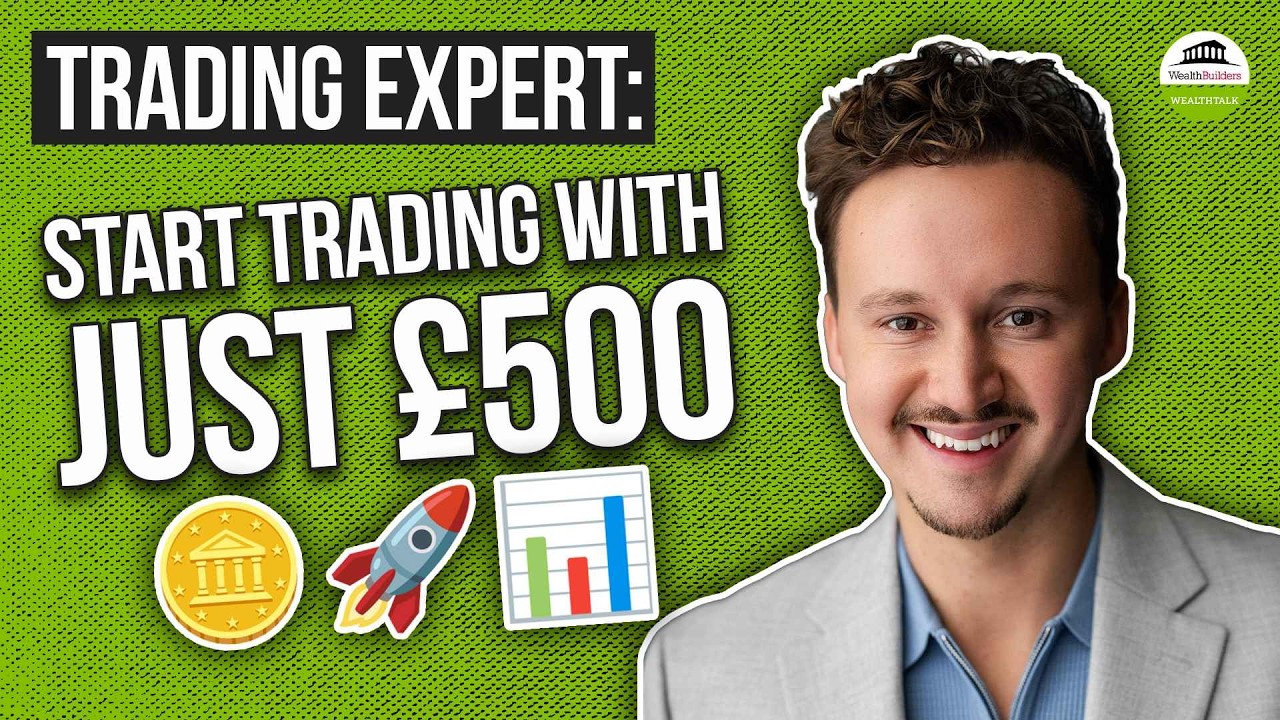
You can actually start with little as 500 pounds. Trading is when you are exchanging on a financial market. So you would buy something for one price, you would sell it for another price, and that difference is where you make your profit. It is only 30 minutes a day. The maximum you could lose on a single trade would be a hundred pounds. You can get very, very good returns. We tend to be aiming for within our community for 5% and up.
speaker-1 (00:27.246)
Hello and welcome to the latest episode of Wealth Builders podcast called Wealth Talk, the podcast which focuses on helping you build, protect and transfer your wealth and certainly fairly and squarely in the building of Wealthside. We've got a guest today called Lewis Crompton. So Lewis specializes in trading. He's got a company called Start Trading.
and his website he'll tell you more about, but I resonated with him and he was very kind enough to invite me on his podcast called Rich Conversation. And we had a good conversation, so I thought, well, why not do a favor and return that because he's a good guy, knows his stuff and I'm always very open to how anybody can build their wealth. So welcome, Lewis. Yeah. Now I understand you're in London because normally you're not.
speaker-0 (01:16.6)
Thank you very much for having me.
speaker-0 (01:21.9)
No, normally I am in Greece. So yes, I moved to Greece at the start of this year, which has been very exciting, very lovely, and I'm very much enjoying the weather over there. And as much as at the time of filming this it's been very hot in the UK, it's not enjoyable heat, is it, in the UK? No. I think. I think we did, yeah. And I'm hoping I'll take it back with me as well. but at least I've got air conditioning in my bedroom over there.
speaker-1 (01:37.911)
you brought the weather with you
speaker-1 (01:45.922)
Yeah, well, likewise, you know, so with my Celtic colouring, anything over 30 degrees, Lois, my brain just kicks out. So I need to stay, I need to stay cool and to stay calm. By the way, on the point of view of Celtic colouring, I just had a, not heraldry, but ancestry. Get the language right. And we'll come back to language because language is very important. They're two very different because I wondered, few people asked me, where does Whelan
come from, such an Irish connection. by going back and looking at the census with somebody who's a potential partner of wealth builders, I think it's great for people to be connected. Yes, we found the first Michael Whelan in 1838. And my son's Michael Whelan, we did not know. So there you go, where does Crompton come from?
speaker-0 (02:36.12)
Crompton actually well, Crompton means riverbend. So it comes from the people of the riverbend, apparently. North, kind of Scottish English borders, I believe, is where it comes from. more on the Scotland side. So there is a Crompton clan as well. And there's even a Crompton Museum of the Clan or House Clan House or something like that. so kind of just over the English border over into the Scottish side.
speaker-1 (03:00.844)
no, that means you've got entitlement to wear the kilt!
speaker-0 (03:03.79)
I do. Technically we have we have a tartan. We do technically have a tartan. I've not worn it, but I would actually quite like to. I I'm quite into I think the older you get, the more you get into family history. and you want to know more about what that what's led to you being who you are today.
speaker-1 (03:20.76)
I think that's a really very important point and I think I just echoed that with my own story and as I work increasingly with the sort of older generation to help them think more about where the wealth will transfer to, there's inevitably a question about where did it all stem from. Yeah, interesting. So, yeah, I think that's an interesting overlap with what we do. let's talk about, you kind of talk about an online trading course for beginners. Why beginners?
speaker-0 (03:50.582)
I have through experience learned that when somebody who has a lot of trading experience but maybe hasn't become successful then comes and discovers what I do and how I do it. Because I keep things really simple, they like to argue with me or they like to then make it more complicated. So being brutally honest, they're just not as enjoyable to work with and they tend to not do as is prescribed in the way that we know gets results. And if someone is already
trading and has been for a number of years and they're successful, then they don't need me. So that's totally fine as well. That's great. I'm very happy for them. So it tends to be those with experience who aren't successful that tend to be the hardest to work with and they don't listen to what I tend to tell them anyway. So they just it's not that they think they know best. They just have their bad habits and they're not necessarily willing to let go of those bad habits.
speaker-1 (04:40.182)
I the way I frame that myself is in the skill that I look for or quality that I look for when we're working with people to potentially work with wealth builders. And that skill or that quality is called humility. The willingness to be open-minded and see different distinctions that can be made by others, because in the absence of that, you stick to your old habits or you stick to the... I'm sure a few people have been in their chest and said, I know better than you.
I'm sure that happens because that's inevitably what happens when you lack humility. I like to point about the beginners, but why do beginners need this then? Why can't they just start on the stock market, invest in some trackers, crack on, set and forget, just keep doing it until they retire, they get old and grey and then they see how things have gone. Why is that a idea?
speaker-0 (05:32.034)
I think there's number of reasons actually why that's a bad idea. Number one, I'm going to use a quote from Warren Buffett: that risk comes from not knowing what we're doing. And so if you are just going to go and do that, that's fine, but get some education behind you in that respect as well. I also think that the traditional kind of safe way of investing, which is the buy and hold for the long term, has a lot of value, has a lot of merit as long as you invest in the right things, but it's also a slower grow.
And you're therefore, because it's a slower grow, you're more impacted by the downvaluing of your wealth due to inflation. So you have more impact from the inflationary side as well. Whereas what trading does is it exceeds inflation in terms of your returns and should, if you're doing it correctly, exceed the returns you're getting from just buying and holding, which also means it's less passive, but my style is also only thirty minutes a day.
So it's not like it's high time commitment.
speaker-1 (06:31.918)
These are a number of fairly big claims, right? So 30 minutes a day, exceed, exceed, so double exceed, beginning to sound a bit too good to be true, Lewis. There's going to be a downside to everything. No matter how thinly you slice anything, there's two sides to it. So why don't we get into that in a second, where you can help our audience understand what you mean by those things and where risk lies, because obviously there is risk in everything. Nothing is completely risk-free.
Let's debunk some of the language. What does trading actually mean?
speaker-0 (07:07.406)
Trading is when you are exchanging on a financial market. So you would buy something for one price, you would sell it for another price, and that difference in price is where you make your profit. So you can do that across any financial market. So you could do that across stocks and shares. People tend to understand that more easily. You can do that across indexes like the FTSE, the Dow Jones. You could buy into the FTSE at one price when it goes up.
You could sell it at that higher price and that trade is where you make your profit. And you can also do it across commodities like gold, silver and oil. You can do it across Forex pairs as well.
speaker-1 (07:48.494)
So lots of it, again, some new language in there in terms of different markets. So how would someone know when there's a timing issue to make a trade? Because in 30 minutes a day, not necessarily the ducks aren't all going to line themselves up on that 30 minutes you take. So give us an example of what people might be looking for and choose something relatively simple that's easy to understand.
rather than some other language that we might introduce as we get to know Yuma Pitmo.
speaker-0 (08:19.64)
Think there's two kind of questions there that I'm gonna answer, even though you asked one because it was a brilliant question. So, first question is really what do we do in 30 minutes? What is our process for that 30 minutes? So, what we're not doing is what you've seen in the movies, what you've seen on Wolf of Wall Street. We're not buy, buy, buy, sell, sell, sell. It's not super intense. That's not what happens in that 30 minutes. In that 30 minutes, we are following very, very particular strategies. And a strategy is just a collection of criteria.
that basically mean the market have to behave in this way, show you this particular thing, have behaved in this way previously. So those are kind of our set of criteria that we would use, a collection of those criteria, four or five of them, creates a strategy. So in our 30 minutes, what we're doing is we're looking to make sure different markets have met that criteria, all of those criteria. So mean we have a tradable opportunity or a non tradable opportunity, which means we just move on.
If we find a tradable opportunity, meaning we tick all the criteria for our strategy, then we would raise an order, which basically means I'm going to tell the broker, get me into this financial market at this price and get me out of the financial market at this price, ideally at a profit. So that's kind of what's really happening in our 30 minutes. We're doing analysis and we are raising orders if the markets that we're looking at meet the criteria of our strategy.
So that's that's kind of the main thing that we're doing in that thirty minutes. So how do we know if it's a good time for us to invest or to buy? Simply it meets all of our criteria.
speaker-1 (09:59.404)
And no doubt this is part of your educational process to be able to help people understand what that criteria is. Yes. that's IP, which we like in wealth builders, intellectual property, good opportunity to create income from what you know. And if you're teaching it and it works, then of course, reputationally and I suppose from a place of integrity, you want to make it work for people. Otherwise,
speaker-0 (10:11.512)
Yeah.
speaker-1 (10:28.318)
It's just one person's and the ability to deliver that skill better or worse than somebody else. So a zero-sum game.
speaker-0 (10:36.366)
That's a very good point. I remember years and years ago when I first started trading, I remember having the desire to teach other people, but I wasn't sure how to do that. And then when I really sat down and thought about, okay, well, how am I trading? What am I doing? Because I kind of developed my yes, I learned from someone, but then I kind of developed my own style over the six years I was trading before teaching anybody else. At that point, I was like, I sat down and thought, okay.
How do I trade? And I kind of codified it. And that's when I realized, okay, every trade I take, I'm following this process, this process, this process, this process. And so that's a step-by-step process that I now teach to other people, which is why, as I was saying before we were on the call, had 150 people from my trading mentorship community at my house, in the garden, having a great time with the sun shining, drinking one too many beers, also watching the football match, which is very important.
and thankfully we won. so everyone was in good spirits. But there's those people following this same structure from around the world and getting those results. So I think it's a really, really important point you make. It's not just a if you talk about the IP thing, how do you make that IP accessible to people so that they can get results as well? Which is about getting it out of your head. And that was quite a fun journey, to be honest.
speaker-1 (11:55.746)
So what qualifies you to be able to teach anything then?
speaker-0 (11:59.67)
In one sense, technically nothing. In another sense, I have been trading now for over twelve years successfully, and I have a track record of making other people successful traders as well through the teaching process that I've created and I that I take them through as well.
speaker-1 (12:16.438)
And what markets does networking?
speaker-0 (12:19.48)
Brilliant question. So probably there's probably markets where it doesn't work, but and the reason I say probably is because everything we do, we've tested before we do it. So I haven't tested every single market that there is out there. So the major markets that we do trade, that we have a list of about 30, which is made up of major and minor forex pairs. It's made up of commodities like gold and silver and some other ones as well. It's made up of indexes like the FTSE, the Dow Jones.
the Nick Eye. We don't tend to trade crypto, although some of my mentees have tested it and do trade it on crypto successfully. It's just not part of our kind of core set of markets that we trade. So I would argue that it can work across any market, but if we're getting into nitty-gritty specific forex markets or specific this, I'm sure there's probably some that it doesn't work on for whatever reason. But those aren't the ones that we would trade. We've got plenty that we know it does work on.
speaker-1 (13:16.322)
And just to help more with the language then, we talked about trading, which you've done very ably. We recently did a podcast with somebody else who has talked about options for a different reason, from a different angle. Why don't you describe options and whether you get involved with options trading as well.
speaker-0 (13:33.614)
Options is a very, very varied style of trading. There's loads of different ways that you can trade options. If you are trading options and you're UK base, one thing I'll say is that it's not tax-free. Whereas if you are in the UK and you use my system, then there would be no tax on it.
speaker-1 (13:51.97)
Why is there no tax on your system?
speaker-0 (13:54.168)
Two ways. Number one, you can use your ISA, which makes it tax-free. Second way that you can do it is you can use what's called a spread account, which the key element of a spread account, which makes it different, is you don't have ownership of the assets that you're trading. So that lack of ownership on the asset means the UK government, thankfully, consider it gambling, which means there's no taxation on it. So I don't see that changing anytime soon either.
So I'm very, very happy about that. If people want to use the same systems, the same process and pay tax, that's fine. You can just use a CFD account or something like that. But if you don't have to pay it, why pay it?
speaker-1 (14:30.542)
It's on behalf of our audience, right? We're introducing a lot of language and some of the language seems already to me to be introducing elements of risk. know, spread account, know, Forex trading, margin calls, any leverage.
speaker-0 (14:48.206)
No. So the only leverage that you would have is the broker already leverages the market itself. So your capital is never leveraged. Same way that if you're trading CFDs, you're doing a micro amount of the actual market. So the market itself is already leveraged, meaning that the decimal point is moved, so you can access at a fraction of the amount that you would actually need to fully enter that market. So your money, your capital is never actually leveraged.
speaker-1 (15:13.656)
So when somebody's starting to think about trading, what's in their mind as to the reason why they're looking at this as an option as opposed to another asset such as property or business or even creating their own IP for that matter.
speaker-0 (15:27.982)
So I think a lot of those other forms of generating wealth are phenomenal. I do all of them, pretty much all of them. They do tend to take more work. Trading is definitely learning work. You have to learn the skills. You have to learn how to do it safely. I have a very particular process that keeps people very safe in the financial market. So I have a way that makes sure it's mathematically impossible for them to lose all of the capital from their trading account as long as they stick to the system. But once you've got that,
Skill set, number one, no one can take the skill set away from you. number two, it is only 30 minutes a day. Really, it's less than that when you know how to do so. And number three, the returns you can get. I was gonna say expect to get, but expectation is not necessarily a good thing, but you can get very, very good returns. We tend to be aiming for within our community for five percent and up once you have multiple trading strategies under your belt.
speaker-1 (16:24.61)
So, I mean, these are sort of eye-watering numbers compared to the set and forget long-term hold or cry and hope, as I often call it. Yeah. Okay. And how long does it take typically for someone to acquire the necessary skills to be able to do that?
speaker-0 (16:38.638)
So we tend to get people who have no experience trading within about a two month period. Now, for them to really grow their confidence and grow their skill set and have multiple strategies, which they're trading live, you're looking at about six months to be really up and running, growing their account, adding in additional capital to their account. Now they've got confidence in a track record of their own successful trading. You're looking at between six months and twelve months.
speaker-1 (17:05.646)
Okay, so not life-changing terms, you're talking about achieving results or getting the feeling that results are likely to be predictable within a relatively short space of time when it comes to normal other assets like property and so on. You can't really do that, generally speaking. You could get lucky and find one property and change your life, but it's rare. That happens, okay, all right, fair enough. Finally on the language.
One of the words you use in your website, which I looked at before we came on, was the use of word swing. Yes. Now, when you get older, that means something completely different. What does it mean to you?
speaker-0 (17:47.842)
So swing trading is a style of trading. and there's four core styles. So position trading, swing trading, day trading, and then what's called scalping. So what they refer to is the time frame that you would be holding a trade, you would be in a trade, you'd be in the market for. So a position trader is the longer term, more you're buy and hold, you're in it for a a year to a few years. Swing trader, which is what we predominantly are, which allows us to trade.
for just 30 minutes a day. You hold a position, you hold a trade for a couple of days to a couple of weeks. Below that is day trading, which is you're holding your position no more than a day generally. And then you have scalpers who are holding positions for maybe one minute to 10 minutes. So it's very, very quick, very, very intense.
speaker-1 (18:36.408)
And in terms of the infrastructure you need, other than do you have a feeling for yourself that it might resonate with you, you need some money, I assume some capital initially at least, starting from, you know, what kind of figure?
speaker-0 (18:51.896)
You can actually start with little as 500 pounds. technically less, but we wouldn't recommend generally less than 500 pounds. But no matter how wealthy people are, I mean, I work with people who are already multi-millionaires. I work with people who are right at the start of their wealth building journey. And even if you are a multimillionaire, we want you to start with no more than 2,000 pounds in an account. Because when you are first beginning, you will make some mistakes. So my job is to keep you as safe as I possibly can. So let's make those mistakes on
Small amounts of capital, not large amounts of capital, and then we grow our account based on our level of confidence.
speaker-1 (19:27.672)
Do you any dummy trading?
speaker-0 (19:30.604)
Yeah, you can do dummy trading. I would say I don't like people dummy trading for more than a week to two weeks, mainly just to get used to the the broker that they're using. What we do is we test. So we have a process called backtesting, which is where we historically test every single strategy. So we test every single market across each strategy. So what I said before, we've tested our our systems on these markets, not those markets.
This is what I'm referring to. So we can give someone three years worth of data on their own ability to trade a strategy by testing that strategy historically on the markets that we would recommend. So they don't have to wait three years to get three years worth of experience and see how it performs. They can do that historically. And that's how we get people trading live confidently and competently in a relatively short period of time.
speaker-1 (20:23.47)
And what are the characteristics that you think make sense in terms of a dynamic of personality or a dynamic of ways of thinking that it might work for and equally those who might not work for, from your experience?
speaker-0 (20:38.328)
From my experience, there's four main personality types in trading, well, in life. But how they relate to trading is really interesting to me, obviously. So we have amiables who like to be with people and they quite like being told what to do. Then you have expressives, which is what I am. I'm very much fun driven, community driven. I just want everything to be fun and enjoyable and everyone to have a good time constantly. Yes, exactly.
speaker-1 (21:01.858)
It's flowing it sounds like.
speaker-0 (21:05.298)
and then you have analyticals who are quite slow to make decisions. They want more data, they always want more information before they make a decision. But for some reason, they very often think they're drivers. So drivers are very fast-paced, very quick decision makers. They want to win all the time. And so all of them have their strengths and all of them have their weaknesses when it comes to trading. And we do a person IT profiler with people to make sure we can adapt our teaching style to them to get them the best results. But I would say the the person who is
best positioned to become a successful trader is the person who is willing to follow a recipe, basically. So like we talked about before, being humble enough to take guidance and feedback, because we have to give a lot of feedback to make sure people are using the systems correctly. So the person who's most willing to follow the recipe, happy to break a couple of eggs, be told that they've broken a couple of eggs and why they've broken a couple of eggs so that they don't break them the next time, that's the person. So technically technically
The person who's most naturally willing to do that is an amiable personality, which is quite interesting, not an analytical.
speaker-1 (22:11.97)
I get that and I can see there's parallels with wealth building and different strategies that we see. We do a similar profiling which we call wealth dynamics which is giving an indication not the same names but basically very similar outputs that you described and it's always interesting. Some people are geared for different types of asset depending on
their decision making style, but all of them are fundamentally flawed if they won't take the distinctions or the differences or to recognize as we do, we're in a who not how culture. And you always need a who to help you get what you want. And that's why I'm so pleased to be able to bring on people who are outstanding in their field to share their insights in their own language in their own way. Okay. Here's my question.
might be sort of counter the wealth building overlap, which is, you we teach in wealth builders how to build multiple streams of recurring income. So you create the asset so you don't need to do the work. This feels like you're only as good as your last trade.
speaker-0 (23:29.47)
Yes. And there is a definite element of truth in that. And I think that's why it's about what you use, the profits you're making from a high cash flowing skill, really, versus an asset. Your your skill is the asset. This high cash flowing skill, what do you then do with it? So that is where you can speed up all the other elements of your passive income because you have a high cash flowing, sorry, cash generating vehicle which is trading. So
Yes, it's not truly passive. It's only thirty minutes a day. It's a low time commitment income. But when you do know what you're doing, when you are getting the results that are possible, you are generating high sums of cash that you can then deposit into these other areas, which speeds up the process of growing all of them.
speaker-1 (24:12.632)
I get that and it's very similar with sometimes it's important to build capital to then redeploy the capital, not just keep focusing on the income. So I definitely get that. That's a good answer. What would be the differences then given AI has brought incredible value in the world and that makes it more difficult to protect your IP? What's to stop somebody going on your course, learning your five key variables?
building an AI agent and then teaching this for a fraction of the cost you charge and building another business that looks and feels exactly the same.
speaker-0 (24:47.544)
There is no way AI could create something that looks or feels that maybe looks the same, but definitely doesn't feel the same. My whole business is built on connection and community. And we work very, very hard to support our clients in the application of the knowledge. All the knowledge I teach is already out there. I've ri I've written a whole book, but and technically it's all in there, but the whole point is it's about the application of that skill set. And so what we do and the way that we do that training is world class.
And that AI can never replace that. Never, never replace that.
speaker-1 (25:21.044)
I mean, that's a good answer. It's the answer I'd expected from somebody who reflects similar values in terms of there's no shortage of knowledge. Knowledge is free, really. Yeah. You know, it's not about the nobody comes to people like you or me for really just for knowledge. It's about the practical application of that to turn that into something they want. OK. So although you're you're not involved in the teaching of those other
assets to which to deploy the money, but from your experience people are building enough fast enough to be able to make a difference in the speed at which they build their other assets, is that right? Is that what you say?
speaker-0 (26:03.426)
Definitely. Yes, definitely. Everybody's at different points in their wealth journey, especially when they start with star trading. And that it takes some of them a few more years to build that initial capital box or only start with, say, five hundred to the point where they can start deploying in other places. But there is plenty of people who are now through that journey and are looking what else to do with that capital. Or there are other people who already have that capital and they're using trading as their first step in that wealth journey.
speaker-1 (26:28.622)
So what happens when somebody's built their wealth? So you've probably heard me say in the introduction, wealth builders is about building, protecting and transferring. I can see there's a skill and the practical application of the skill to help people build with the 30 minutes a day, with the right application of skill sets, with the right guard rails to keep them as safe as possible. When somebody makes a mistake, I just want to go there a minute because risk is...
What we don't want to do is be accused of making things sound too easy because practical applications, there's diligence everywhere. When somebody makes a mistake, what do they make and what does it cost them potentially? Let's say if they're doing £2,000 or £10,000 or £20,000 or whatever, they're starting.
speaker-0 (27:16.44)
So we base everything on percentages. So the risk on any trade you would ever place, we cap at one percent of your total trading capital pot. So if your trading capital pot is ten thousand, the maximum you could lose on a single trade would be a hundred pounds. So if you had a hundred thousand pounds in your trading pot, the total you could lose on a single trade would be a thousand pounds. So each trade is low risk.
The maximum amount of risk exposure you would have in the market at one time across multiple trades would be five percent. It's very unlikely that all five trades would lose in one go. What we also do is we make sure that our potential loss never exceeds our potential profit. And what we also try to do is make sure that our potential profit does exceed our potential loss so that when we have winning trades, it should buy us a losing trade and a bit more.
So we're constantly making our risk to reward ratio in our favour.
speaker-1 (28:20.75)
And it's good that there's the pragmatic application of language of winning and losing, recognizing there's no system to win every time. And I know you weren't making that claim, but I think you've articulated it very well. Okay, so the building stage, and I can see that, and you talked about the skillset needed, the accessibility that you don't need a huge amount of capital to get involved and to start seeing the results, because if you're measuring it in percentages, it doesn't matter whether it's a thousand or 10,000 or 100,000 or a million. How does...
what you share, you teach, how people protect their wealth for the future.
speaker-0 (28:55.946)
Good question. So I don't think we do much training on that to be honest. I think what we do helps with that is we are very much 80% mindset, 20% skill set. And so the whole of the trading process is about emotional management. And for me, if you want to protect your wealth long term, you need to control your emotions when stuff A goes right, but also when stuff goes wrong, because both of those things happen and can therefore lead to the wrong decision being made.
So there's a lot of emotional control and mindset work that we do within our trading. Because trading is actually not a natural thing for the human brain to do. It's not. Because you're technically putting your brain into a position of risk every single day because you are exposing money, okay, albeit only 1%, but you're still exposing money into the market and you have to get used to that and get used to that feeling. And that is partly why we start with a small amount of capital so people can get those muscles working.
seeing that money in the market technically at risk, but also then feel that excitement of the reward when we have a winning trade, also feel that disappointment of a loss when we have a losing trade and maintain adherence to the strash into the system as well. So although we don't technically teach protection, I feel like what we teach helps people adhere to the system, the structure, which gets them further and gets them to keep that money as well that they've made.
speaker-1 (30:21.048)
Tell us a little bit more about the platforms because in the protection, not just the structure of protection, but just so we understand that if somebody's involved in this, they build whatever they build, however they built it, there needs to be some record keeping. And if there's records, somebody could die leaving those records only in their head. So where is that information kept? How safe is it? And what are the other ingredients to be able to access that?
if you've got somebody who's doing well, they're doing it as part of their strategy, but unfortunately they're no longer here, but the next generation or the executors of their will need to be able to find this information. Where is it all kept?
speaker-0 (31:03.662)
So we use brokers who are your access point to the market that are FCA regulated. So we wouldn't ever recommend a broker that isn't FCA regulated, which means all those records are kept within the broker system, the broker account. So that's totally accessible at any point that it's needed.
speaker-1 (31:20.462)
Okay, is this via a platform or via a direct account with the broker?
speaker-0 (31:24.302)
Direct account with the broker. Yeah. So for example, in the UK, there's brokers such as FXCM, IG Capital, Mex there's also Pepperstone. So it's all these different brokers, but all of those ones I've just mentioned are FCA regulated. There's plenty of brokers that are not. And I would not advise using those. But yeah, you have a you have your own account directly with them. You can trade through a pension if it's the right type of pension and they let you trade through that pension.
speaker-1 (31:46.926)
So that means you can't do this in a pension.
speaker-0 (31:53.89)
Yes, you can do.
speaker-1 (31:55.188)
Okay, so let's just double check that because we have a lot of clients with control over their pensions in SAS and they can trade options, it's the, for example, but the options account is held under a structure that's held within the SAS as opposed to a direct broker account. As long as the broker account can be opened by the pension, do you have any experience with that? So it can be done.
speaker-0 (32:23.084)
I haven't personally done that. one thing I would say for clarification purposes is that you can't use your pension for a spread account. You wouldn't be able to do that. And you wouldn't put your pension money into one of the brokers I've just mentioned, because it would have to be held within that particular pension pot. But if that pension provider allows you to trade financial markets, you can use that same skill set, same decision making, same strategies just through your pension, as long as they allow you to trade through it.
speaker-1 (32:52.662)
Okay, maybe that's something we can look at and explore that together because if it's possible and people want to build their pension quickly and it's I mean, it's a tax free environment anyway in a pension albeit not inheritance tax free as we
speaker-0 (33:10.294)
Or income tax free, sadly. Well
speaker-1 (33:12.334)
Well, pension is income tax free because there's no income tax to pay the gains.
speaker-0 (33:17.346)
You I thought you paid tax on it once you drew it down then.
speaker-1 (33:19.918)
Yeah, but that's when you're much older. yeah, but yeah, I mean, there's always the government always want their piece of the pie, right? So tax relief on the way in tax free on the way, you know, when you're building, but tax when you draw income minus a 25 % tax free amount and the inheritor's tax chargeable from next year. So talking about inheritor's tax, which is a transfer
of wealth to the next generation and inherits as tax payable is a capital tax, not an income tax. So it's a tax on capital. Is there any and ever a tax on capital?
speaker-0 (34:07.49)
On this? No. I mean, again, this is not financial advice, but if you check if you check HMRC's website, which I did again the other week, because I like to always check every now and then, spread betting is tax free. There's no capital gains tax, there's no income tax. if it was to become your major, major only source of income, then there's an argument that could be made that it would become taxable, but it's still technically a grey area.
The brokers again who are FCA regulated will say this on their websites as well. HMRC says the same thing on their website as well. No capital gains tax, no income tax at all.
speaker-1 (34:44.366)
So the capital that's built up can be transferred, but if on death the capital is in an account, then that would be assessable in someone's estate for the purposes of inheritance tax?
speaker-0 (34:55.918)
Yes, it would be it would be this part of the estate.
speaker-1 (34:58.328)
However, skills can be transferred. They can. Can a parent, teacher, rising generation, these skills, are your skills transferable to somebody else?
speaker-0 (35:08.418)
Definitely. We've got we've got people in our community who are mentees of ours and they're teaching their children, which I love. I absolutely love that. That makes me very happy. Some of them have even bought their kids for their eighteenth birthday mentorships with us because they wanted the kids to have the skills. They didn't want to be the one teaching them. So that's pretty cool as well.
speaker-1 (35:28.056)
I get that one. There's a lot to be said for parents, not necessarily just because of the history of all that growing pains in the years to be the right teachers. So equally often in what we do is we try and be an independent trustee face to teach the next generation how to safeguard the money that's already established, not necessarily the building, although it's an interesting.
angle for those who've decided to get involved with that. So if anybody likes to cut your jib sir, likes what you've said, wants to know a little bit more, how would they find out more about you?
speaker-0 (36:09.006)
I spend a lot of time on Instagram, so that's a good place to find me. So that's at with W I T H Lewis Crompton or my website, which is Lewis that's not true. Actually, there is Lewiscrompton.com. There is actually that one. That's also easy to find. But there's also startradingnow.com. And I wrote a book called Wealth Through Trading. So if you go to Amazon, just type in wealth through trading, you can find me there as well.
speaker-1 (36:34.988)
That's fine. Well, we put in the details of those for anybody who's listening when they're jogging or walking the dog so they can't do anything right now. We always like a bit of leverage time. Maybe they can find another 30 minutes. Mind you, my dog needs a lot more than 30 minutes, but there you go. Okay. As any final and parting observations you want to make about where this fits in an overall wealth building strategy?
speaker-0 (37:02.254)
Personally, it's a fantastic place to diversify. I started off as a trader and then diversified into everything else, which is why I very much see it as that cash capital generator that we then hit certain levels that we want to hit and we then diversify into the other asset classes, which is where you are an expert, Kevin. So I think it very much partners very well. Yes, it requires learning. Yes, it requires skill. Very much like going to the gym. You need to keep showing up to keep into good shape.
And that's maybe where it's less all rosy and all all good stuff 'cause you do have to keep turning up, but it's only for thirty minutes a day and it's totally worth it. Okay.
speaker-1 (37:40.91)
Well, thank you so much for sharing, Louis. We appreciate it. You you're giving off your wisdom and hopefully people will find you. And I'd like to say the big thank you on behalf of the audience and to everybody else who's listening. Until next time on Well Talk, see ya.
We hope you enjoy today's episode. Don't forget that we are constantly updating our resources inside the WealthBuilders membership site to help you create, build and protect your wealth. Head over to wealthbuilders.co.uk slash membership right now for free access. That's wealthbuilders.co.uk slash membership.
Episode summary
Episode notes
- Why trading should be viewed as a skill rather than a shortcut to wealth.
- How education and consistency lay the foundations for long-term success.
- Understanding the difference between trading and traditional buy-and-hold investing.
- Why both approaches can play complementary roles in a wealth-building strategy.
- How disciplined risk management helps protect trading capital.
- Why successful traders focus on controlling losses as much as generating profits.
- How following a proven trading strategy removes emotion from decision-making.
- Why consistency often delivers better results than trying to predict the market.
- How swing trading can fit around a busy lifestyle.
- Why effective trading isn't about constantly watching the markets.
- Why emotional control, patience and discipline are essential for long-term success.
- How mindset influences every trading decision.
- How trading can generate capital that can be reinvested into other assets.
- Why diversification remains a key principle of building lasting wealth.
- Why teaching financial skills can be just as valuable as passing on financial assets.
- How developing knowledge today can create opportunities for future generations.
- Treat trading as a skill that requires education, practice and discipline.
- Focus on managing risk before thinking about potential returns.
- Develop a structured trading process and stick to it consistently.
- Avoid emotional decision-making by following proven rules and strategies.
- Consider how trading could complement your broader wealth-building plan alongside property, business and pensions.
- Invest in financial education that helps you build confidence before committing significant capital.
- Remember that long-term wealth is built through consistency, not speculation.
Resources mentioned in this episode
- WealthBuilders - Build, protect and transfer your wealth
- STARTrading - Trade safe. Invest smart. Grow together.
- The STARTrading Podcast
- Lewis Crompton's Instagram
- WealthBuilders Membership: Free access to guides, webinars, and community
Listen on Spotify, Apple Podcasts, YouTube, and all major platforms.
Next Steps On Your WealthBuilding Journey:
- Join the WealthBuilders Facebook Community
- Schedule a 1:1 call with one of our team
- Become a member of WealthBuilders
